Featured Hospitality & Architectural Lighting Collections
Explore engineered luminaire configurations tested for seismic compliance, thermal dissipation, and high spatial lumen efficiency. Click below to request customized spec sheets and trade catalogs.
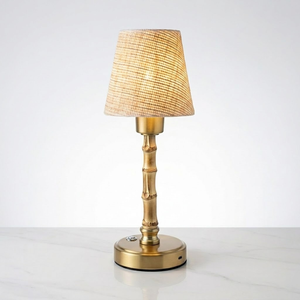
Rechargeable Hospitality Lighting Cordless LED Vintage Bamboo Design Luxury Table Lamp
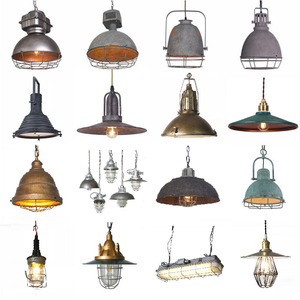
Vintage Industrial Pendant Light E27 Hanging Ceiling Lamp Retro Loft Lighting Fixture
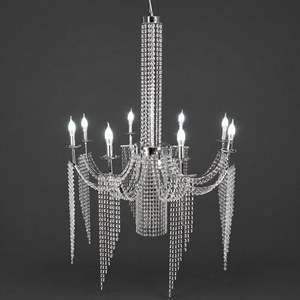
Modern Rectangle Glass Metal 8-Light Pendant Lamp Chrome/Gold Finish Warm/White Light
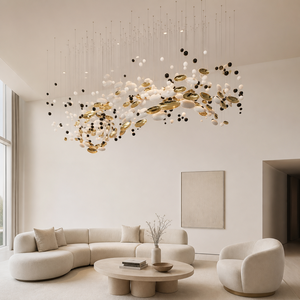
Modern Style Indoor Decoration Hotel Lobby Villa Staircase Custom Glass LED Chandelier
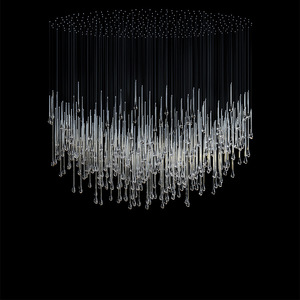
Customized Creative Long LED Pendant Light with Adjustable Height for Hotel Lobby & Atrium
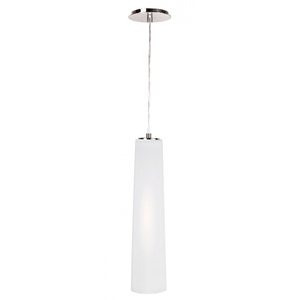
Marriott Residence Inn Possibilities Hotel Ceiling Lamp Guestroom King/Queen HL-73851
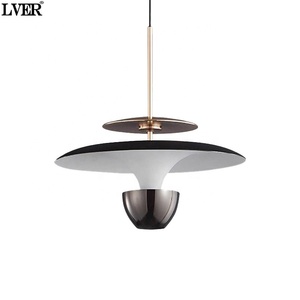
Modern Minimalist Restaurant LED Ceiling High Luminous Efficiency Motorized Spotlights
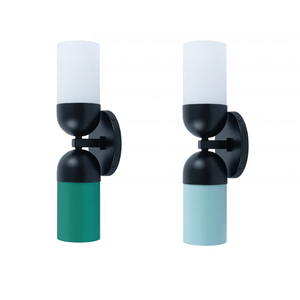
Home2 Dynamic Hospitality Lighting Supplier Two Light Cylinder Acrylic Wall Sconce
Engineering Excellence: Why Leading Architectural Studios Rely on Our Global Export Infrastructure
As a global authority and leading enterprise crystal chandeliers exporter, our organization bridges the gap between ambitious spatial concepts and flawless physical execution. In commercial hospitality, luxury high-rise developments, and grand public rotundas, decorative lighting serves not merely as ambient illumination, but as the visual centerpiece of spatial identity. Specifying large-scale crystal ceiling features requires an integrated manufacturing partner capable of navigating complex structural load factors, stringent international electrical certifications, and meticulous optical engineering.
Operating through fully integrated engineering and design studios in Toronto, Miami, Lisbon, Riyadh, and Dubai, we provide specifiers, interior architects, procurement agents, and MEP engineers with a unified point of accountability. From initial reflected ceiling plan (RCP) reviews to final site installation support, our Design-for-Manufacture (DFM) methodology eliminates structural ambiguities and value-engineering risks early in the development lifecycle.
"A crystal chandelier in a commercial environment is an engineering assembly subjected to dynamic building vibrations, seismic shear, thermal load, and complex optical refraction. Realizing a designer's vision requires total material control from metal patination to crystal chromatic purity."
Our collaborative portfolio includes iconic installations developed alongside industry-leading interior architecture practices such as AvroKO, II BY IV DESIGN, Studio Paolo Ferrari, Nina Magon Studio, and Johnson Studio at Cooper Carry. Premier hospitality flagships—including Marriott Residence Inn, Hilton Home2 Suites, Nuri Steakhouse Dallas, and Amelia Gene Memphis—demonstrate our capacity to produce turnkey, code-compliant custom fixtures that endure rigorous commercial operating conditions.
In-House DFM & CAD Detailing
Complete 3D SolidWorks drafting, finite element analysis (FEA) for structural weight distribution, and precise installation rigging schematics provided prior to material cutting.
Optical Grade K9 & Lead Crystal
Hand-cut, diamond-polished, and machine-faceted crystal components possessing a refractive index of $n_d \ge 1.52$, delivering zero chromatic aberration and maximum dispersion.
Global Compliance & SASO/UL
Factory-certified assembly under UL 1598, CE EN 60598, and SASO-IEC safety standards with comprehensive pre-shipment dielectric breakdown and thermal testing.
Optical Crystal & Architectural Metal Specification Benchmark
Understanding material performance characteristics is critical when procuring commercial-grade decorative lighting. The table below outlines our technical standardization parameters compared to generic market offerings:
| Performance Metric | Commercial Export Grade (Our Standard) | Generic Market Equivalents | Architectural Impact |
|---|---|---|---|
| Crystal Refractive Index ($n_d$) | 1.520 – 1.585 (Optical K9 / Lead-Free Purity) | 1.450 – 1.480 (Soda-Lime Pressed Glass) | High dispersion, vivid spectral fire, visual depth |
| LED Light Engine CRI / R9 | CRI > 98, R9 > 92 (Custom Bridgelux/Citizen) | CRI 80 – 85, R9 < 10 | True-to-life interior material render & skin tones |
| Metal Finish Process | PVD Titanium Coating / Multi-stage Electroplating | Standard Spray Lacquer / Basic Anodizing | Zero oxidation, salt-spray resistance, long life |
| Structural Rigging Safety | 5:1 Static Dead-Load Safety Factor | 2:1 or Unverified Load Thresholds | Seismic safety in public spaces and high-ceilings |
| Control Driver Protocols | 0-10V, DALI-2, Casambi Wireless BLE, Phase-Cut | Basic Non-Dimming or Simple Triac | Seamless integration with Lutron/Control4 systems |
Future Sourcing & Procurement Trends in Commercial Crystal & Decorative Lighting (2025–2030)
The global contract lighting sector is undergoing a profound paradigm shift driven by technological miniaturization, stringent building sustainability codes, and modern luxury design sensibilities. B2B procurement leaders and global sourcing agents must navigate several critical market evolutions over the coming decade:
1. Convergence of Micro-LED Modules & Optical Crystal Assemblies
Traditional chandeliers relied on visible E14 or GU10 lamp sockets, which constrained geometry and added bulky lamp holders. Contemporary procurement specifications increasingly demand integrated LED boards concealed directly within machined crystal rods or brass hardware. By coupling micro-chip-on-board (COB) arrays with optical-grade light guides, light is emitted evenly from within the crystal mass without hot spots or visible shadows.
2. Smart Chromatic Tuning & Circadian Lighting Integration
In luxury hospitality environments, lighting must fluidly transition from energetic daylight illumination during morning breakfast service to ultra-warm, romantic ambient tones during evening dining. Global procurement standards now mandate Tunable White technology (2200K to 5700K) controlled via DALI-2 DT8 or Bluetooth Mesh architectures, allowing operators to dynamically adjust spatial moods without changing physical fixtures.
3. Modular Installation & Rapid On-Site Assembly Systems
Site labor costs represent an increasing proportion of commercial interior budgets. Leading crystal chandeliers exporters are redesigning structural frame architectures to utilize modular quick-connect harnesses and pre-labeled, factory-assembled crystal branches. Modern modular configurations cut on-site hanging and electrical commissioning time by up to 60%, significantly mitigating contractor installation risks.
4. Circular Manufacturing & Lead-Free Crystal Compliance
Environmental standards such as LEED v4.1 and BREEAM have elevated material health requirements across major construction markets. Sourcing lead-free optical crystal formulated with barium or zinc oxides ensures compliance with EU RoHS directives while maintaining crystal brilliance, weight, and acoustic resonance.
Technological Innovations in Large-Scale Custom Chandelier Fabrication
Engineering monumental ceiling installations demands rigorous technical synthesis between mechanical engineering, thermodynamics, and optical physics. At our manufacturing centers, every custom chandelier undergoes a detailed engineering sequence designed to ensure lifetime reliability:
Thermal Management in Enclosed Glass
High-output LED chips generate localized thermal energy that, if unmanaged, drastically accelerates lumen depreciation ($L_{70}B_{10}$). We integrate custom-extruded 6063-T5 aluminum heat sinks within brass canopy housings to maintain junction temperatures below $65^\circ\text{C}$.
Laser-Guided Faceting & CNC Cutting
Precision computer-numerical-control (CNC) multi-axis diamond grinding wheels cut crystal glass to sub-millimeter tolerances ($< \pm 0.1\text{mm}$). This yields razor-sharp facet intersections that maximize internal reflection and rainbow dispersion.
Anti-Seismic & Cable Rigging Systems
Suspension setups utilize marine-grade 316 stainless steel aircraft cables equipped with self-locking brass grippers and secondary safety lanyards. Systems are engineered to withstand lateral seismic acceleration forces up to Zone 4 standards.
Furthermore, our advanced surface treatment facility employs Physical Vapor Deposition (PVD) vacuum coating alongside traditional electroplating. PVD deposits atomic-level titanium or zirconium films onto metal frameworks, yielding champagne gold, dark bronze, or polished nickel finishes that resist corrosion, UV degradation, and tarnishing even in coastal high-humidity resort environments.
Frequently Asked Questions for Commercial Buyers & Procurement Teams
Clear responses to critical technical, logistics, and compliance queries encountered during commercial lighting procurement:
How does your design-engineering team transform initial interior sketches into a fully certified luminaire?
What optical crystal formulations do you offer for high-traffic commercial environments?
What international electrical safety certifications do your custom chandeliers carry?
How are structural weight loads and building suspension points engineered for giant lobby chandeliers?
What are typical factory lead times, and how do you ensure zero breakage during global freight transit?
Can your custom chandeliers be integrated into smart building management systems (BMS) and Lutron controls?
Ready to Elevate Your Architectural Lighting Specification?
Connect directly with our engineering team in Toronto, Miami, Lisbon, Riyadh, or Dubai. Request a complete 2026 contract lighting catalog, request material sample kits, or submit your project drawings for a detailed technical cost estimate.