Engineering-grade luxury fixtures manufactured in-house for international hospitality, high-end residential, and commercial developments.

Engineering Excellence in Bespoke Architectural Lighting Fabrication
In modern architectural design, illumination transcends basic functionality—it serves as an structural medium that shapes spatial human perception, brand identity, and environmental ambiance. As a premier global bespoke lighting manufacturer and exporter, our operations bridge the gap between creative interior design concepts and real-world engineering viability. We specialize in transforming complex architectural sketches, 3D renderings, and Reflected Ceiling Plans (RCP) into physical, certified, and enduring lighting features.
Our integrated manufacturing infrastructure brings multi-material fabrication—spanning precision sheet metal, CNC-machined brass, hand-blown crystal arrays, thermoformed architectural polycarbonates, and backlit natural stone slabs—under unified Quality Assurance (QA) protocols. Operating through global design and technical hubs in Toronto, Miami, Lisbon, Riyadh, and Dubai, we provide international procurement teams, principal architects, and lighting consultants with a single point of technical accountability from concept development through final site installation.
In-House Manufacturing Advantages & Multi-Material Expertise
The primary challenge facing commercial project specifiers is the fragmentation between conceptual design studios and third-party contract factories. Value engineering often degrades initial aesthetic vision due to structural, electrical, or thermal oversights. Our enterprise framework eliminates this disconnect by incorporating Design-for-Manufacturability (DFM) at the initial project evaluation stage.
Custom Decorative Lighting Engineering
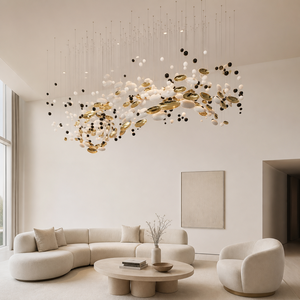
From multi-tiered atrium chandeliers to custom kinetic ceiling installations, our engineering team executes Finite Element Analysis (FEA) to calculate structural load limits, seismic anchoring requirements, and thermal dissipation paths for high-output LED engines.
Architectural Metal & Polycarbonate Panels
We process decorative metal screens, partitions, and light-diffusing polycarbonate elements using waterjet precision cutting, PVD (Physical Vapor Deposition) titanium plating, and hand-applied patinas designed to maintain color fidelity in high-traffic commercial environments.
Backlit Natural Stone Feature Systems
Integrating natural marble, alabaster, and translucency-mapped onyx into structural lighting features. Every stone slab is hand-selected, resin-stabilized, sub-millimeter calibrated, and back-illuminated with custom-binned LED matrices ensuring flicker-free, edge-to-edge optical uniformity.
Comprehensive Product Technical Analysis & Application Matrices
Commercial lighting procurement requires balancing spatial aesthetics, long-term operational durability, energy efficiency metrics, and ease of maintenance. Below is an engineering evaluation of our primary manufactured light fixture categories:
| Product Category | Primary Materiality | Electrical & Optical Specs | Target Applications | Certifications & Standards |
|---|---|---|---|---|
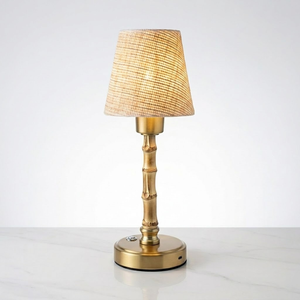
| Cordless Hospitality Lamps | Natural Bamboo / Anodized Aluminum / PMMA Diffuser | Li-ion 5200mAh, CRI > 95, 2700K Warm Dimming, Touch Control | Luxury Dining, Hotel Lounges, Outdoor Event Spaces | CE, RoHS, IP65 Waterproof |
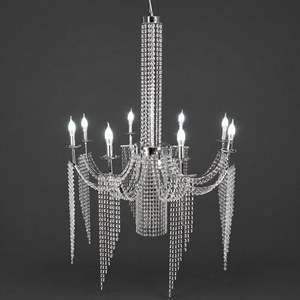
| Grand Staircase Chandeliers | Optical K9 Crystal / Precision Stainless Steel / Brass | Custom Constant Current Drivers, DALI-2 / Casambi BLE Dimming | Hotel Lobbies, Duplex Residences, Banquet Halls | UL Listing, ETL, CE Compliance |
| Brand-Standard Guestroom Fixtures | Impact Acrylic / Fabric Shade / Extruded Aluminum | Double E26/E27 sockets or integrated high-efficacy LED board (120 lm/W) | Marriott Residence Inn, Home2 Suites, Commercial Guestroom Packs | UL/cUL Certified, Title 24 Compliant |
| Adjustable Architectural Spotlights | Die-cast Aluminum / Micro-Prismatic Lenses | Motorized / Manual Height Lift, Beam angle 15°-60° tunable, UGR < 16 | High-Ceiling Restaurants, Art Galleries, Retail Showrooms | CE, Energy Star, Class II Insulation |
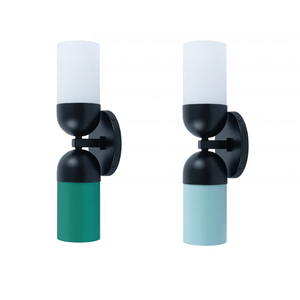
When engineering custom guestroom solutions—such as the Marriott Residence Inn Possibilities Ceiling Lamp or the Home2 Dynamic Cylinder Wall Sconce—our production line strictly adheres to brand design guidelines (AFFF/FF&E standards). We utilize unified acrylic extrusion dyes and standardized mounting backplates to ensure rapid site deployment and reduced contractor installation timelines.
Strategic Procurement Trends in Global Architectural Lighting (2025–2030)
As commercial real estate and hospitality developers face evolving regulatory frameworks and elevated guest expectations, global lighting procurement strategies are undergoing structural shifts. Specifiers and purchasing agencies must evaluate the following five core vectors during vendor selection:
1. Wireless Mesh Controls & Dynamic IoT Protocol Integration
Hardwired control cables (DMX/0-10V) are increasingly being replaced by integrated wireless mesh architectures such as CASAMBI BLE, DALI-2 Wireless, and Matter-enabled node networks. Modern bespoke fixtures must embed RF-transceivers directly within metal canopy enclosures without compromising shield aesthetics or signal propagation ranges.
2. Circular Economy & Modular Field Repairability
Commercial specifiers are rejecting fully sealed, non-serviceable LED fixtures in favor of modular driver housings and standardized light engines. Our manufacturing philosophy mandates that high-value chandeliers and decorative wall sconces feature field-replaceable LED boards and quick-disconnect driver assemblies, dramatically lowering life-cycle maintenance expenditure.
3. Low-Carbon Metallurgy & Sustainable Materiality
Embodied carbon calculations are now mandatory in tier-one architectural bids. We prioritize recycled marine-grade aluminum alloys, water-based zero-VOC protective lacquer coatings, and locally sourced natural stones, backed by full Environmental Product Declarations (EPD) for LEED v4.1 credit allocation.
4. Human-Centric Lighting (HCL) & Tunable White Spectrums
Simulating natural circadian daylight cycles requires precise, multi-channel LED binning. Our linear pendants and custom lobby features incorporate dual-chip 1800K to 6500K tunable engines with MacAdam 2-Step Color Consistency, preventing visual color variations across multi-fixture installations.
5. Low-UGR Glare Reduction & Micro-Prismatic Optics
With modern interior standards requiring Unified Glare Ratings (UGR) below 19—and frequently below 16 for luxury dining environments—our light engines combine secondary TIR (Total Internal Reflection) lenses with micro-prismatic acrylic diffusers, eliminating direct diode hotspots while maximizing total fixture luminous efficacy (lm/W).
Materiality Innovations & Manufacturing Technologies
The evolution of custom lighting manufacturing relies directly on advancements in material processing. Traditional methods of relying solely on heavy cast brass and clear glass have expanded into advanced hybrid material composites:
- PVD (Physical Vapor Deposition) Metal Coatings: Unlike conventional electroplating, which generates hazardous chemical sludge and is prone to oxidation in coastal environments, PVD vacuum-deposits titanium nitride alloys onto stainless steel. This creates scratch-resistant, non-fading satin brass, rose gold, and gunmetal finishes capable of enduring 1,000+ hours of ASTM B117 salt spray testing.
- Optical-Grade Architectural Polycarbonate: For massive overhead art installations where glass weight poses structural hazards or seismic risks, we process thermoformed optical polycarbonates. These panels feature custom light-scattering micro-structures, providing 92% light transmission while reducing overall structural dead-load by up to 60%.
- Sub-Millimeter Natural Stone Lamination: Natural onyx, alabaster, and marble slabs are precision-sliced using diamond wire saws to thicknesses of 3mm to 5mm, then resin-bonded to ultra-clear tempered glass backing. This technique enables even light transmission through real stone while maintaining structural integrity across large wall sconces and lit bar front panels.
Frequently Asked Procurement & Technical Questions (FAQ)
Addressing core technical considerations for principal architects, interior designers, MEP engineers, and commercial procurement managers.