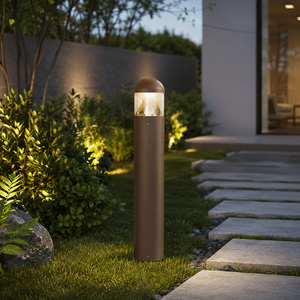
Factory Direct Outdoor IP65 Waterproof Aluminum LED Bollard Light
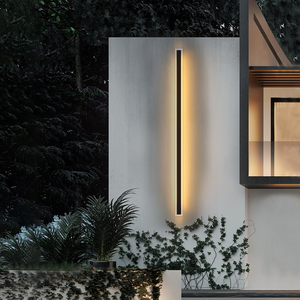
DAWN Lighting IP65 Modern LED Wall Lamp Aluminum Base Long Strip
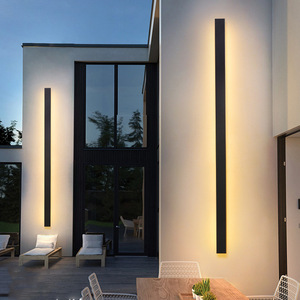
DAWN Outdoor Wall Lamp Waterproof IP65 AC85-265V Front Porch Light
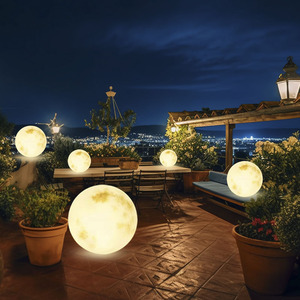
LED Plastic Moon-Shaped IP55 Dimmable Night Light Landscape Lamp

LED Garden Lights Outdoor Waterproof for Pathway & Patio Home Lighting

Aluminum IP65 Solar/AC Luminous Glowing LED Birch Tree Trunk Luminaire
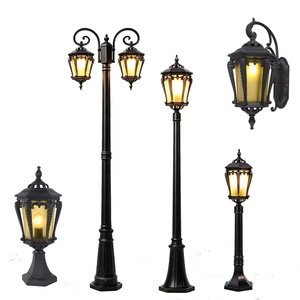
Customized Outdoor Waterproof Aluminum AC LED High Pole Street Light
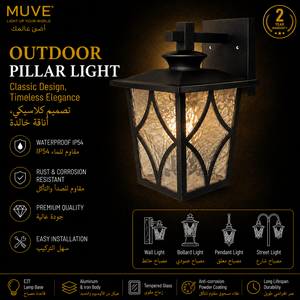
Traditional Outdoor Wall Lantern with Water Ripple Glass for Villa Garden
Navigating China’s Outdoor Lighting Manufacturing Ecosystem
The global outdoor architectural and commercial lighting sector has undergone a structural transformation. Procurement directors, lighting specifiers, and electrical engineering consultants no longer evaluate China outdoor lighting manufacturers purely on cost per lumen. Today's global procurement benchmark demands sophisticated Design-for-Manufacture (DFM) capabilities, rigorous optical engineering, adherence to dark-sky initiatives, thermal simulation precision, and comprehensive international compliance (CE, UL, ETL, RoHS, CB, and SAA).
China’s manufacturing landscape—centered around specialized industrial clusters in Guangdong (Zhongshan, Shenzhen, Dongguan) and Zhejiang (Ningbo, Hangzhou)—accounts for over 65% of global luminaire supply. However, navigating this vast ecosystem requires a granular understanding of Tier-1 vs. Tier-3 manufacturing tiers. High-tier exporters differentiate themselves through full vertical integration: from in-house ADC12 aluminum die-casting, automated CNC precision turning, optical silicone potting, and fluorocarbon powder coating to fully equipped goniophotometer testing laboratories and integrating advanced IoT drivers.
This whitepaper analyzes technical parameters, procurement dynamics, quality assurance frameworks, and emerging technology vectors defining China’s top outdoor lighting exporters.
Engineering Parameters for Specification-Grade Outdoor Luminaires
Thermal Management & Tj Control
Thermal degradation is the primary root cause of LED lumen depreciation ($L_{70}/B_{10}$) and color shift over time. Premier manufacturers utilize high-thermal-conductivity die-cast aluminum heat sinks ($k > 96 \text{ W/m·K}$) coupled with Metal Core Printed Circuit Boards (MCPCB) utilizing dielectric layers with $> 2.0 \text{ W/m·K}$ conductivity. Maintaining LED junction temperature ($T_j$) below $75^\circ\text{C}$ in ambient temperatures of $45^\circ\text{C}$ guarantees structural lifespan extending beyond 50,000 operational hours.
Ingress Protection & Surface Treatments
Exterior installations require robust ingress protection (IP65, IP67, IP68) and corrosion resistance. Leading exporters implement multi-stage pre-treatment (chromate washing) followed by AkzoNobel or PPG architectural-grade electrostatic powder coating. This process withstands over 1,000 to 3,000 hours of ASTM B117 salt spray testing, protecting fixtures deployed in harsh coastal environments (C4/C5 corrosion categories).
Driver Ecosystems & Power Quality
The power supply represents the electrical heart of any exterior system. Specification-grade luminaires integrate Tier-1 drivers (Inventronics, Mean Well, Philips Xitanium) featuring wide input voltage ranges (AC85-265V or AC120-277V), high power factor ($\text{PF} > 0.95$), low Total Harmonic Distortion ($\text{THD} < 10\%$), and integrated 10kV/20kV Surge Protection Devices (SPD) to withstand grid volatility and lightning strikes.
Future Product & Technological Trends in Outdoor Lighting
As urban infrastructure evolves toward smart city integration and ecological conservation, China’s elite outdoor lighting manufacturers are pioneering technical shifts across four critical domains:
1. Hybrid Solar-Grid Storage Microgrids
The next generation of landscape and high-pole illumination integrates dual-mode solar-AC hybrid engines. Using high-efficiency mono-crystalline solar panels ($\eta > 23\%$) and long-cycle Lithium Iron Phosphate ($\text{LiFePO}_4$) battery packs, these systems dynamically switch between renewable off-grid energy and utility AC power based on real-time load analytics and battery State of Charge ($\text{SoC}$).
2. Dark-Sky Optical Control & BUG Ratings
Light pollution mitigation has transitioned from a preference to a mandatory building code requirement. Modern optical engines incorporate precision PMMA cut-off lenses that direct $100\%$ of emitted lumens into target zones, achieving Backlight-Uplight-Glare ($\text{BUG}$) ratings of $U_0$ and $G_0$. This prevents spill light, atmospheric skyglow, and ecological disruption to local fauna.
3. Smart IoT Mesh & Dynamic CCT Tuning
Integrating Zhaga Book 18 or NEMA 7-pin receptacles allows exterior luminaires to seamlessly adopt IoT nodes running on DALI-2, Zigbee 3.0, or Matter protocols. Commercial outdoor installations now feature dynamic Correlated Color Temperature ($\text{CCT}$) tuning—shifting automatically from 4000K crisp white during early evening traffic peak to 2200K warm amber in late hours to minimize biological circadian impact.
B2B Sourcing Trends & Supply Chain Optimization
International buyers are restructuring their procurement frameworks when collaborating with Chinese export partners. The historical model of selecting stock items from off-the-shelf catalogs has been replaced by a co-engineering approach. Key macro trends driving global lighting procurement include:
Shift to Co-Engineering (DFM)
B2B buyers now involve manufacturers during early schematic design stages. Utilizing shared 3D CAD modeling, structural FEA (Finite Element Analysis) wind-load simulations, and photometric IES/LDT data generation, specifiers eliminate installation bottlenecks prior to mass production.
Modular Repairability & Circularity
In compliance with EU EcoDesign Directive and ESG directives, specifiers mandate toolless driver access and field-replaceable LED light engines. This modular architecture drastically lowers total cost of ownership ($\text{TCO}$) and circular economy footprints.
Factory Audit & Traceability Protocols
Tier-1 procurement teams deploy third-party inspectors (SGS, TÜV, Intertek) to verify ISO9001 compliance, raw material spectral purity, and component-level serial tracking from LED die binning (MacAdam Ellipse Step 3/5) to final assembly.
Why Top Global Brands Partner With Our Manufacturing Engine
Combining architectural craftsmanship with high-capacity industrial production, our manufacturing facilities embody the pinnacle of China's advanced export capabilities. By integrating design-engineering, metalwork fabrication, specialized surface treatment, and photometric testing under one centralized quality-control roof, we deliver custom exterior lighting systems for hospitality, municipal infrastructure, high-end residential, and commercial developments worldwide.
In-House Engineering & Prototyping
Our multi-disciplinary team of optical, structural, and electrical engineers translates preliminary architectural renders into precise shop drawings. Rapid physical 3D mock-ups, CNC-machined prototypes, and thermal imaging validate performance metrics before tooling investment.
Rigorous QA & Environmental Testing
Every production batch undergoes comprehensive quality assurance: IPX6/IPX7 water immersion testing, high-temperature burn-in chambers ($55^\circ\text{C}$ under full load), salt spray corrosion chambers, vibration testing, and integrating sphere photometric validation.
Global Project Delivery & Compliance
With export documentation expertise spanning North America, Europe, the Middle East, and Asia-Pacific, we handle localized certification requirements, protective seaworthy packaging, and custom project logistics for seamless site delivery.
Frequently Asked Questions by B2B Buyers & Specifiers
What is the standard lead time for OEM/ODM custom outdoor lighting orders?
For standard catalog items with custom CCT or finish specifications, lead times typically range between 15 to 25 calendar days. Fully custom architectural OEM/ODM projects requiring new die-cast tooling, DFM engineering, and prototype approvals require 35 to 50 days, depending on structural complexity and certification scope.
How do you guarantee color consistency (SDCM) across mass production batches?
We enforce strict LED die binning protocols, sourcing exclusively from Tier-1 LED packagers (Cree, Lumileds, Osram, Nichia, Bridgelux). All production lots are constrained to a 3-Step or 5-Step MacAdam Ellipse (SDCM ≤ 3), ensuring imperceptible color variance across large-scale commercial installs.
Which ingress protection (IP) and mechanical impact (IK) ratings are recommended for commercial outdoor projects?
For standard pathway, bollard, and wall applications, IP65 is the minimum operational threshold. For ground-recessed in-grade uplights or coastal installations subject to submersion or heavy sea spray, IP67 or IP68 is required. For high-traffic public areas, luminaires must achieve IK08 to IK10 mechanical impact ratings to withstand vandalism and physical stress.
Can photometric web files (.IES or .LDT) be provided for DIALux lighting design simulation?
Yes. Our internal optical testing laboratory utilizes a Type-C Goniophotometer to generate accurate photometric files (.IES and .LDT format) for all standard and customized optical configurations. These files enable lighting designers to accurately calculate lux levels, light uniformity, and glare metrics in DIALux or Relux software.
What warranties are provided on commercial outdoor fixtures?
We provide comprehensive 3-year to 5-year replacement warranties across our commercial product lines. Warranties cover LED array lumen depreciation beyond L70, driver power supply failures, structural housing integrity, and finish adhesion against peeling or excessive discoloration under normal environmental exposure.
Partner With China's Premier Lighting Exporter
Consult with our engineering team today to review your project specifications, request photometric IES files, or receive a factory-direct OEM/ODM quotation.