Precision OEM/ODM Lighting Solutions
Specified by leading design studios worldwide. Engineered for hospitality, luxury retail, and architectural environments.
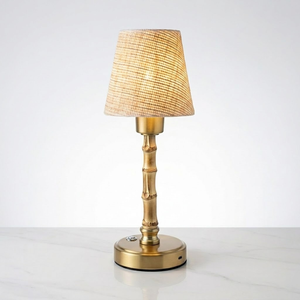
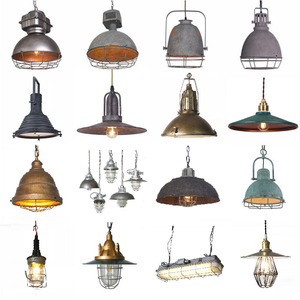
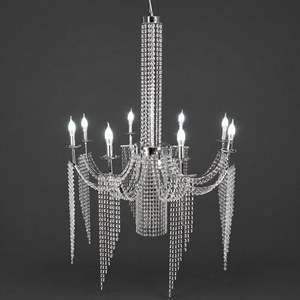
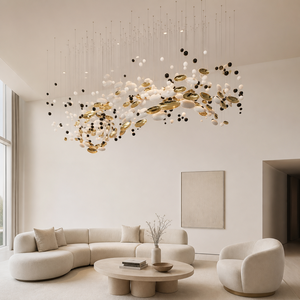
Executive Technical Summary: Navigating Enterprise Retail & Hospitality Lighting Fabrication
The contemporary retail and hospitality architectural landscape demands a fundamental shift in how custom lighting luminaires are specified, engineered, and manufactured. As global commercial brands seek unique sensory experiences, standard off-the-shelf fixtures fail to meet complex spatial constraints, strict visual merchandising optics, and rigorous LEED/WELL building standards. Sourcing through specialized OEM (Original Equipment Manufacturer) and ODM (Original Design Manufacturer) lighting partners has evolved from a simple cost-reduction strategy into an essential design-engineering capability.
This white paper serves as an authoritative specification guide for lighting designers, architectural procurement managers, and commercial real estate developers. We explore the full lifecycle of custom architectural lighting—from early-stage Design for Manufacturability (DFM) and photometric simulation to multi-material fabrication, thermal junction dissipation, dynamic white tuning, and international compliance certification (UL, ETL, CE, RoHS).
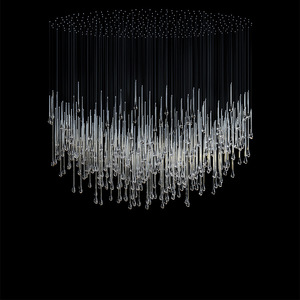
When procuring high-volume retail or hospitality fixtures—such as custom crystal canopies, architectural metal screens, cordless table lamps, or drop-pendant clusters—enterprises must balance artistic vision with operational scalability. Working with an integrated manufacturer capable of executing glasswork, precision metal milling, resin molding, and backlit natural stone under a single unified Quality Assurance (QA) system eliminates risk, avoids budget creep, and guarantees long-term performance.
Enterprise Advantages: Multi-Disciplinary Materiality & In-House Production
Unlike conventional assemblers who outsource critical components to fragmented supply networks, premier OEM/ODM partners maintain complete vertically integrated fabrication studios. By bridging the gap between raw concept sketches and physical installation, our global engineering centers across Toronto, Miami, Lisbon, Riyadh, and Dubai provide end-to-end oversight across three core architectural disciplines:
Custom Decorative Lighting
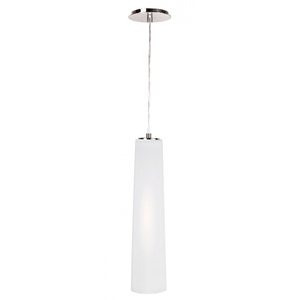
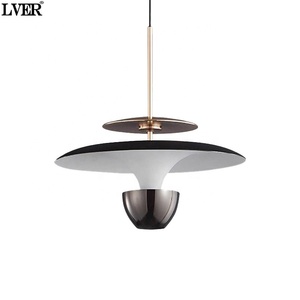
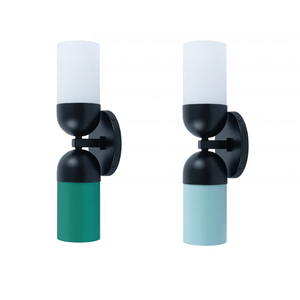
Full-scale engineering of large-format lobby chandeliers, floating crystal canopies, custom residential pendants, and hotel guestroom fixtures engineered specifically for ceiling structural load limits and maintenance access.
Architectural Metal & Polycarbonate
Laser-cut brass, bronze, aluminum, and stainless steel screen features integrated with light-transmitting polycarbonate architectural panels for visual acoustic control and space partitioning.
Natural Stone Feature Wall Interiors
Precision slab-matched translucent marbles, onyx, and quartzite featuring engineered backlighting arrays calibrated for shadowless uniformity and low thermal radiation.
The 6-Stage Integrated DFM Engineering Workflow
To eliminate expensive retrofits on-site, a rigorous engineering methodology is required before full production releases:
- Stage 01: Concept Interrogation & Photometrics: Reviewing reflected ceiling plans (RCP), target Lux levels, color rendering thresholds (TM-30-18 values), and mounting structure capacity.
- Stage 02: Design for Manufacturability (DFM): Translating aesthetic renderings into 3D parametric CAD models, generating finite element analysis (FEA) for stress loads, and optimizing junction box access.
- Stage 03: Physical Prototyping & Mock-ups: Fabricating 1:1 scale component mock-ups, testing finish patinas under target LED color temperatures (2700K–5000K), and verifying driver dimming curves.
- Stage 04: Advanced Materiality & Finishing: Applying physical vapor deposition (PVD), custom electroplating, hand-applied patinas, or UV-stable powder coatings built for high-traffic wear.
- Stage 05: In-House Fabrication & QA Testing: Complete assembly with 100% burn-in electrical testing, thermal imaging, and photometric integration sphere measurements prior to crating.
- Stage 06: Sequential Logistics & Field Support: Modular packing aligned with contractor construction sequences, complete with step-by-step installation manuals and structural hardware.
Comparative Analysis: OEM/ODM Custom Engineering vs. Mass Commercial Sourcing
Procurement departments often face trade-offs between unit cost and long-term operating reliability. The matrix below contrasts key performance indicators across manufacturing models:
| Technical Criterion | OEM Custom Manufacturing | ODM Co-Development | Off-The-Shelf Commercial |
|---|---|---|---|
| Color Fidelity & Binning | Single-bin MacAdam 2-step (CRI 95+, R9 > 90) | MacAdam 3-step (CRI 90+) | MacAdam 5-step (CRI 80-85) |
| Thermal Management | Custom extruded copper/copper-core heat sinks | Standard aluminum heat sinks | Stamped sheet metal / passive air |
| Dimming Protocol Compatibility | Universal DALI-2, 0-10V, Phase, Casambi, DMX512 | 0-10V or Phase-cut standard | Fixed voltage / non-dimmable driver |
| Lifespan (L70 / B10) | > 60,000 Hours @ 85°C Junction Temp | > 50,000 Hours | 15,000 – 25,000 Hours |
| Material Finishing Standards | PVD coating, hand-rubbed brass, custom stone | Standard anodizing & powder coating | Basic wet paint / spray coat |
| Compliance & Certification | Project-specific UL / cUL, CE, ETL listed | Standard regional mark (CE or UL) | Self-declared or limited mark |
Strategic Trends Shaping Retail & Hospitality Lighting Procurement
As commercial spaces pivot toward omnichannel physical experiences and wellness-focused architectural standards, OEM/ODM manufacturers are integrating next-generation technologies directly into luminaire design:
1. Circadian Rhythm Tuning & Human-Centric Lighting (HCL)
Modern luxury retail stores and hotel guestrooms are shifting away from static correlated color temperature (CCT). Modern OEM specifications incorporate dual-channel Chip-on-Board (COB) LEDs capable of seamless spectrum transitions from 1800K candle-warm ambient light at dusk to 5000K crisp daylight during peak afternoon trading hours. This enhances circadian alignment for hotel guests while optimizing retail product texture and color dynamic ranges under customized spectral power distributions (SPD).
2. Cordless Flexibility & Portable High-Bay Power Systems
Flexibility is paramount in dynamic hospitality venues, event halls, and luxury dining spaces. The rise of high-capacity lithium-iron-phosphate ($LiFePO_4$) rechargeable engines embedded within artisan table lamps—such as bamboo, brass, or hand-blown glass fixtures—allows operators to reconfigure dining layouts without the constraints of floor sockets or visible power cables. Key OEM parameters include magnetic inductive charging pads, 12+ hour runtime at 250 lumens, and IP65 weatherproofing for indoor-outdoor transitions.
3. Circular Material Economy & Low Embodied Carbon
Enterprise procurement specifications increasingly audit the carbon footprint of structural metals and optical components. Leading ODM manufacturers utilize recycled low-carbon aluminum extrusions, eco-formulated polycarbonates, and modular mechanical fasteners instead of permanent adhesives. This modularity ensures component-level field replaceability (drivers, LED engines, lenses), extending luminaire lifecycles to 15+ years while reducing landfill impact.
4. Wireless Mesh Smart Controls (Casambi, Matter, DALI-2 Wireless)
Eliminating complex control wiring lowers installation labor costs by up to 40% in commercial retrofits. Advanced OEM retail fixtures feature factory-integrated Bluetooth Low Energy (BLE) micro-controllers directly inside fixture canopies. This allows lighting designers to program automated scenes, daylight harvesting feedback loops, and real-time energy usage analytics directly via smartphone interfaces or building management systems (BMS).
Manufacturing Innovation: Advanced Optical & Material Engineering
The next decade of retail lighting manufacturing will be defined by breakthroughs in optical physics, thermal substrate engineering, and digital manufacturing techniques:
Micro-Prismatic Optical Arrays
Replacing traditional frosted diffusers, micro-structured optical lenses direct light precisely onto visual merchandising surfaces with zero glare ($UGR < 16$), maximizing contrast and product allure.
Direct-to-Chip Graphene Thermal Paste
Integrating synthetic graphene thermal interface materials (TIM) improves heat dissipation from high-density LED arrays by over 40%, preventing lumen depreciation in compact fixtures.
PVD Acoustic Screen Integration
Combining decorative physical vapor deposition (PVD) metal screens with sound-absorbing acoustic felts creates dual-purpose architectural elements for noisy hotel lounges and restaurants.
Frequently Asked Questions (FAQ) for OEM/ODM Sourcing
ODM (Original Design Manufacturing): The manufacturer provides pre-engineered fixture designs, driver architectures, or optical systems that you can customize with unique physical finishes, dimensions, branding, or mounting configurations.
Engage Our Global Engineering Team
Submit your CAD drawings, reflected ceiling plans, or project schedules. Our design engineers in Toronto, Miami, Lisbon, Riyadh, and Dubai will deliver a complete DFM analysis and competitive OEM quote within 48 hours.