Featured OEM/ODM Perforated Panel Solutions
Engineered for acoustic mastery, structural integrity, and architectural luxury. Select a product specification below to request tailored OEM/ODM manufacturing details.
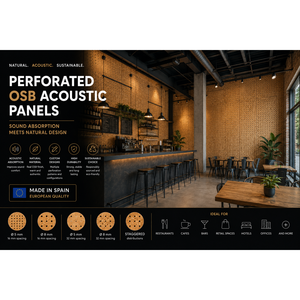
5mm/8mm Perforated MDF Acoustic Interior Panels
Precision-bored acoustic MDF wall panels engineered for sound damping in luxury living spaces, auditoriums, and commercial lounges. Features custom hole patterns and high-density acoustic backing.
Get Catalog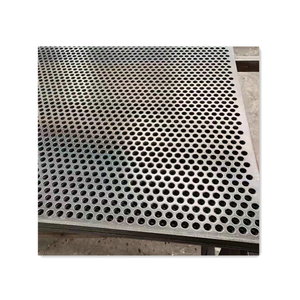
Micro-Perforated Stainless Steel & Aluminum Strip Sheets
Industrial-grade perforated stainless steel and lightweight aluminum sheet strips. Ideal for ventilation screens, machine filtration, high-durability interior cladding, and architectural mesh.
Get Catalog
Custom Minimalist Perforated Acoustic Wall Cladding
Tailor-made perforations with variable hole pitch for high-end hospitality interiors. Provides superior acoustic comfort (NRC 0.9) while seamlessly matching custom wood grain or paint finishes.
Get Catalog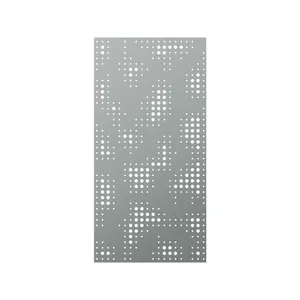
Laser-Cut Decorative Stainless Steel Privacy Screens
High-precision laser-cut and punched metal screens tailored for luxury hotel lobbies, space dividers, and architectural privacy screens. Exceptional structural strength and anti-corrosion finish.
Get Catalog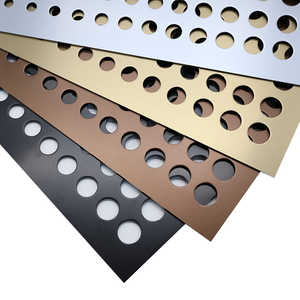
Multi-Tone Anodized Aluminum Exterior Facade Panels
Architectural anodized aluminum sheets available in Silver, Champagne Gold, Bronze, and Obsidian Black. Engineered for building exteriors, sunshades, and ventilated curtain walls.
Get Catalog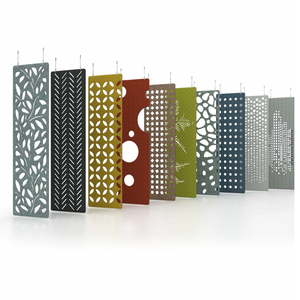
Hollow-Out Eco-PET Polyester Fiber Soundproof Boards
Sustainable and 100% recyclable polyester fiber acoustic panels with artistic hollowed perforations. High flame retardancy, low VOC emissions, and non-toxic acoustic performance for modern offices.
Get Catalog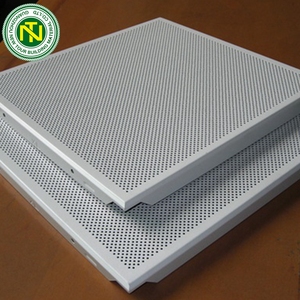
Washable Waterproof Perforated Metal Drop Ceiling Tiles
Standard 600x600mm aluminum clip-in/lay-in ceiling tiles with black sound-absorbing tissue membrane. Fully washable, fire-resistant, and moisture-proof for commercial medical and corporate spaces.
Get Catalog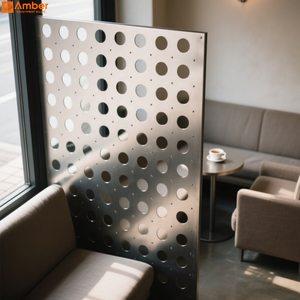
Heavy-Duty Architectural Perforated Space Partition Panels
Bespoke spatial dividers manufactured from high-tensile stainless steel with precision laser perforations. PVD color coated for high-traffic public, retail, and commercial interior zones.
Get CatalogIntegrated OEM/ODM Engineering Supremacy & Global Production Network
In high-specification architectural projects and global infrastructure development, perforated panels serve a dual mandate: providing uncompromising structural and acoustic performance while executing complex aesthetic design intents. As a premier global OEM/ODM manufacturer, our unified production setup bridges the critical gap between raw design concepts and fully certified, installable architectural assemblies.
Operating through synchronized international engineering studios in Toronto, Miami, Lisbon, Riyadh, and Dubai, our organization provides architects, interior designers, acoustic consultants, and general contractors with a single point of technical accountability. From concept sketches and reflected ceiling plans (RCP) to detailed Design-for-Manufacture (DFM) shop drawings and final CNC turret fabrication, we ensure that open area percentages, wind-load resistance, acoustic absorption metrics (NRC), and surface finishes match exact submittal tolerances.
Unlike fragmented assembly lines, our in-house capabilities encompass complete metal punching, multi-axis fiber laser cutting, automated edge bending, micro-perforating, continuous anodization, PVDF fluorocarbon coating, and high-density acoustic backing lamination (e.g., SoundTex tissue and acoustic PET backing).
| Material Specification | Standard Thickness Range | Available Perforation Geometries | Max Surface Finish Options | Acoustic Rating (NRC) |
|---|---|---|---|---|
| Aluminum Alloy (3003-H14 / 5052-H32) | 0.8mm – 6.0mm | Round, Square, Hexagonal, Slotted, Parametric Artistic | Anodized (25µm), PVDF 3-Coat, Powder Coating | 0.75 – 0.95 (with Fleece/PET) |
| Stainless Steel (SUS 304 / 316L) | 0.5mm – 4.0mm | Micro-Perforated (0.5mm-2mm), Staggered, Linear Screen | PVD Mirror Titanium, Satin Brushed, Electropolished | 0.65 – 0.85 |
| Acoustic MDF / Engineered Wood | 12mm – 18mm | Grooved Perforated, Blind Holes, Micro-bore (1mm-8mm) | Natural Wood Veneer, Melamine, Flame-Retardant PU | 0.80 – 0.95 |
| Eco Polyester Fiber (PET) | 9mm – 24mm | Laser Hollow-Out, CNC V-Carve Pattern, Layered Cut | Integral Color Dying (40+ Standard Shades) | 0.85 – 0.90 |
Future Procurement Trends in Architectural Perforated Panel Systems
The global market for perforated panels is undergoing a major technological transformation, driven by strict building efficiency mandates, strict indoor environmental quality (IEQ) standards, and advanced digital fabrication techniques. B2B buyers and specifiers must navigate four emerging strategic procurement trends:
1. Micro-Perforated Sound Absorbers (MPP) Without Fibrous Fillers
Traditional acoustic systems rely heavily on glass wool or mineral fiber backings to achieve high sound absorption. However, modern healthcare, cleanroom, and high-end residential specifications increasingly demand Micro-Perforated Panels (MPP) with hole diameters below 1.0mm. MPP creates viscous boundary layer resistance that dissipates sound energy directly within the metal or acrylic sheet without requiring fibrous materials that degrade or release airborne particles over time.
2. Closed-Loop Recycled Aluminum & EPD-Certified Substrates
Global procurement frameworks (LEED v4.1, BREEAM, and DGNB) now prioritize low-embodied-carbon structural facades. OEM suppliers must provide verified Environmental Product Declarations (EPD). Our aluminum perforated panel production utilizes up to 85% post-consumer recycled aluminum alloys, processed using low-emission hydraulic CNC tooling and closed-loop anodization water recycling systems.
3. Parametric Image-to-Punch (Pixelated) Architectural Facades
Static hole patterns are rapidly giving way to dynamic algorithmic facades. Through parametric CAD/CAM integration, bitmap images or gradient lighting maps are automatically translated into varying hole diameters across hundreds of facade tiles. Procurement teams now require suppliers capable of managing complex tile identification algorithms, sequential export packaging, and automated site assembly mapping.
4. Multi-Functional Energy-Efficient Solar Shading Envelope
Perforated panels are no longer viewed purely as decorative skins; they function as active solar mitigation envelopes. Modern exterior perforated screens are calculated to optimize daylight autonomy while reducing Solar Heat Gain Coefficients (SHGC) by up to 45%. B2B buyers increasingly specify perforated aluminum panels with engineered open area ratios (15%-35%) tuned precisely to regional solar angles.
Material Science Innovations & Finishing Technologies
Achieving long-term performance in diverse environments—from high-humidity coastal zones to thermally demanding high-rise building envelopes—requires advanced material selection and surface treatment engineering:
- Anodized Multi-Tone Electrochemical Finishes: Utilizing multi-stage electrolytic coloring processes, our anodized perforated aluminum panels achieve rich, fade-resistant champagne gold, deep bronze, bronze-black, and titanium silver tones. The oxide layer thickness (ranging from Class I 18µm to 25µm) offers extreme resistance to ultraviolet degradation, chalking, and salt spray corrosion (tested over 3,000 hours under ASTM B117).
- PVD (Physical Vapor Deposition) Sputtering on Stainless Steel: For interior privacy dividers and luxury hotel lobby installations, PVD titanium coating applies ultra-hard nitride coatings over 304 or 316-grade stainless steel. This creates scratch-resistant, fingerprint-repellent finishes in rose gold, brass, black mirror, and rainbow iridescent effects.
- Thermally Bonded PET Acoustic Composites: Combining perforated wood MDF or metal sheets with flame-retardant (ASTM E84 Class A / EN 13501-1 Class B-s1,d0) polyester fiber backings using eco-friendly hot-melt adhesives ensures permanent adhesion without off-gassing formaldehyde or toxic VOCs.
Perforated Panel Procurement & Technical FAQ
Essential technical guidance, structural engineering tolerances, acoustic metrics, and OEM export logistics for professional specifiers and purchasing leads.
Ready to Specify Custom Perforated Panels for Your Next Project?
Partner directly with an established global OEM/ODM manufacturer. Get complete engineering submittal support, acoustic calculations, CAD/CAM shop drawings, and tailored price estimations from our international team studios in Toronto, Miami, Lisbon, Riyadh, and Dubai.