Featured Custom Acrylic & Integrated Lighting Assemblies
Engineered to spec for hospitality, architectural features, commercial real estate, and luxury retail visual displays.
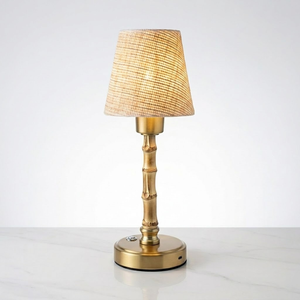
Rechargeable Hospitality Cordless LED Table Lamp with Optical Acrylic Diffuser
Precision molded PMMA diffuser paired with vintage bamboo aesthetic for high-end hotel and restaurant dining.
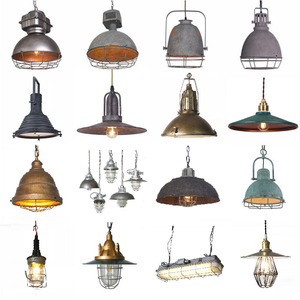
Industrial Pendant Light Fixture with Prismatic Acrylic Refractor Sheet
Retro loft hanging ceiling luminaire featuring anti-glare micro-structured acrylic refractors for retail and dining bars.
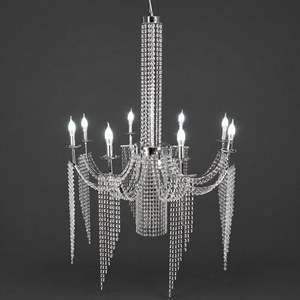
Modern Rectangular Dual-Layer Acrylic & Metal 8-Light Architectural Pendant
Custom edge-lit acrylic panel inserts in chrome/gold metal frame, optimized for uniform residential & commercial illumination.
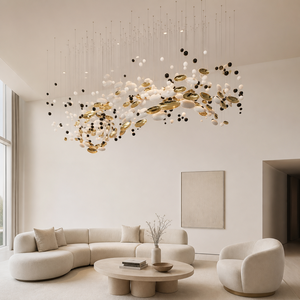
Custom Sculptural Cast Acrylic LED Chandelier for Hotel Lobby & Staircase
Large-scale thermoformed acrylic light sculpture engineered for grand staircases, atrium voids, and luxury lobbies.
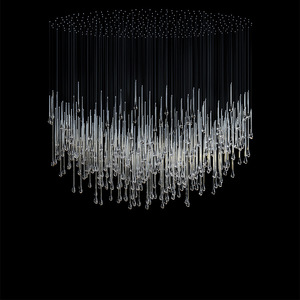
Custom Linear Laser-Etched Acrylic Light Guide Pendant for Banquet Halls
Height-adjustable long linear LED luminaire with high-transmittance optical PMMA matrix for seamless architectural ceiling integration.
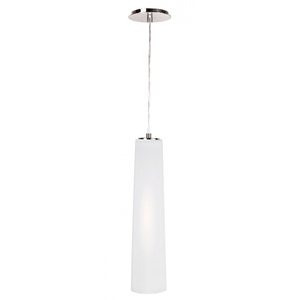
Hospitality Brand Standard Flush-Mount Acrylic Ceiling Fixture (Marriott Approved)
OEM specification-grade guestroom ceiling lamp utilizing shatter-resistant matte opal acrylic shade for soft ambient light.
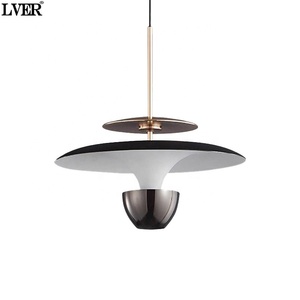
Minimalist High-Luminous Efficiency Acrylic Lens Spot & Pendant Module
Precision-engineered micro-optic PMMA lenses offering high CRI efficiency and adjustable height mechanisms for dining areas.
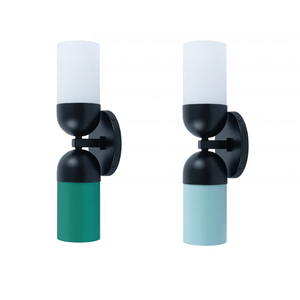
Architectural Cylindrical Extruded Acrylic Dual-Light Wall Sconce
Extruded optical cylinder acrylic sconce engineered for hotel corridor and guestroom accent lighting compliance.
Optical PMMA & Acrylic Panel Manufacturing Metallurgy
An in-depth analysis of material physics, Total Internal Reflection (TIR), laser engraving dot density, and mechanical performance parameters for B2B specifiers.
Optical Transmittance Physics & Refractive Control
Polymethyl Methacrylate (PMMA), commonly known as acrylic, serves as the gold standard for architectural light modulation and light guide plate (LGP) manufacturing. With a natural luminous transmittance of 92.8% for clear cast virgin resin, optical PMMA outperforms standard soda-lime glass (which exhibits ~88-90% due to iron oxide tinting) while weighing less than half.
Our OEM fabrication processes utilize virgin methyl methacrylate monomers (MMA) sourced from premium chemical suppliers (such as Mitsubishi Chemical and Evonik Degussa), completely eliminating recycled yellow-grade scrap. The Abbe number of optical PMMA stands at 58, ensuring minimal chromatic aberration across visible wavelengths (380nm to 780nm).
Laser V-Cutting & Dot Matrix Light Guide Technology
For edge-lit LED backlighting panels used in luxury ceiling installations and retail display cases, light distribution uniformity is governed by Total Internal Reflection (TIR). Uncut acrylic channels light down its length with minimal lateral leakage. To extract light uniformly across large surface areas (exceeding 3000mm x 2000mm), our manufacturing lines employ 3D Laser Dot Matrix Etching and micro-prismatic diamond V-cutting.
By adjusting the density and depth of the etched dots proportional to the distance from the LED light engine (using logarithmic spacing algorithms), panel brightness variance is maintained under ±3% across the entire active surface area.
| Physical / Optical Property | Cell Cast PMMA (Acrylic) | Extruded PMMA | Polycarbonate (PC) | Tempered Soda-Lime Glass |
|---|---|---|---|---|
| Light Transmittance (%) | 92.8% | 91.5% | 88.0% | 89.0% |
| Density (g/cm³) | 1.19 | 1.18 | 1.20 | 2.50 |
| Refractive Index (nD) | 1.49 | 1.49 | 1.586 | 1.52 |
| Heat Deflection Temp (°C) | 100 - 105 °C | 85 - 95 °C | 135 - 140 °C | > 500 °C |
| Impact Resistance (kJ/m²) | 15 - 20 (High) | 10 - 12 (Moderate) | 75 - 80 (Ultra-High) | 2.5 (Brittle) |
| UV Weatherability (10-Yr) | Zero Yellowing (ΔY < 1) | Slight Yellowing (ΔY 2-3) | High Yellowing (Requires Coat) | No Change |
| Machinability & CNC Milling | Superior (Polished Edge) | Good (Melt-Prone) | Fair (Burr-Prone) | Requires Diamond Tooling |
Integrated OEM Manufacturing & Single-Source Accountability
From structural calculations to 5-axis CNC diamond edge-polishing, our engineering facilities bridge conceptual design and buildable geometry.
In-House DFM & Prototyping
Our Design for Manufacture (DFM) engineers analyze reflected ceiling plans (RCP), thermal loads, and structural suspension hardware prior to tooling. We deliver physical material mock-ups and photometric IES files within 5-7 business days.
Global Footprint & Studios
With strategic operational hubs located across Toronto, Miami, Lisbon, Riyadh, and Dubai, we provide localized technical support, project management, export documentation, and site-sequenced freight logistics worldwide.
Rigorous QA & Cleanroom Assembly
Precision optical lamination, anti-glare micro-prismatic film application, and LED strip bonding are executed in Class 10,000 cleanroom environments. Every panel undergoes 100% luminance mapping before export crating.
Future Procurement & Technological Trends in OEM Acrylic Manufacturing
Key technological advancements driving specification changes across commercial lighting, architectural features, and global supply chains over the next decade.
1. Bio-Based PMMA & Circular Economy Materials
Global architectural standards such as LEED v4.1 and BREEAM are aggressively driving demand for sustainable polymers. OEM manufacturers are shifting toward Bio-Attributed PMMA synthesized from organic waste feeds and chemically recycled rMMA (recycled Methyl Methacrylate).
Depolymerization technologies allow scrap optical acrylic sheets to be thermally cracked back into 99.8% pure monomer fluid, achieving identical optical clarity and UV stability as fossil-fuel virgin acrylics while reducing carbon footprint by over 70% per metric ton produced.
2. Micro-Lens Arrays (MLA) & Glare Reduction (UGR < 19)
With modern visual comfort standards mandating a Unified Glare Rating (UGR) below 19 in corporate and hospitality settings, simple frosted opal diffusers are being superseded by micro-structured acrylic sheets. Micro-Lens Arrays (MLA) combine thousands of microscopic optical domes per square inch, precisely manipulating light ray paths to direct peak intensity downward while suppressing wide-angle glare. This maximizes useful lux output while protecting occupant eye comfort.
3. Integrated Dynamic Tunable White & Edge-Lit LGPs
Circadian rhythm lighting (Human-Centric Lighting) requires optical media capable of uniform color mixing across CCT spectrums ranging from 2200K warm candleglow to 6500K daylight. Advanced OEM acrylic panels incorporate embedded quantum dot films and specialized diffusion additives that eliminate color separation and chromatic banding at the panel edge, establishing a completely homogeneous illuminated plane.
4. Supply Chain Regionalization & Rapid Custom Tooling
Global enterprise buyers are increasingly mitigating shipping risk by establishing dual-track OEM sourcing. The integration of 5-axis high-speed CNC milling and direct digital laser engraving allows acrylic panel manufacturers to produce custom thermoforming molds and architectural prototypes without long-lead hard tooling, reducing turnaround times from 8 weeks down to 10 days.
Frequently Asked Procurement & Engineering Questions
Expert technical answers regarding minimum order quantities, custom fabrication, optical performance, and international export logistics.
What is the difference between Cell Cast Acrylic and Extruded Acrylic for custom light panels?
Cell Cast Acrylic (PMMA) is produced by pouring liquid monomer between two polished glass sheets, resulting in higher molecular weight, superior optical clarity (92.8% light transmission), and excellent thermal resistance. It is highly recommended for CNC laser cutting, edge polishing, and custom light guide plates (LGP). Extruded Acrylic is manufactured by pushing melted resin through dies; while more economical with tight thickness tolerances, it is softer, melts more easily during laser cutting, and exhibits slightly lower chemical resistance.
Can you fabricate custom oversized acrylic panels beyond standard sheet sizes?
Yes. While standard acrylic sheet dimensions are 1220mm x 2440mm (4x8 ft) and 2000mm x 3000mm, our industrial cast manufacturing facilities can produce custom continuous cell-cast PMMA slabs up to 3500mm x 9000mm with thicknesses ranging from 2mm to 200mm. For large-scale architectural light walls or atrium chandeliers, we also utilize seamless solvent-welding and museum-grade museum-annealing techniques that render joint seams virtually invisible under light illumination.
What international quality certifications and compliance standards do your acrylic products hold?
Our OEM acrylic manufacturing facilities operate under strict ISO 9001:2015 Quality Management and ISO 14001 Environmental System certifications. All raw PMMA materials comply with EU RoHS 3 (Directive 2015/863) and REACH regulations (SVHC-free). For electrical hospitality and commercial fixtures, our integrated acrylic light assemblies carry UL94 V-0 or V-2 flammability ratings, CE, and ETL safety listings suitable for North American, European, and Middle Eastern building codes.
How do you prevent yellowing and degradation of acrylic panels in outdoor or high-UV applications?
Standard untreated polymers degrade when exposed to ultraviolet radiation (UV-A and UV-B). Our outdoor architectural acrylic panels incorporate chemical UV-stabilizers (HALS - Hindered Amine Light Stabilizers) co-extruded directly into the polymer matrix. This guarantees that panels subjected to intense sunlight will retain optical clarity with a Yellowness Index increase of less than ΔY 1.0 over a 10-year operational lifespan, backed by our manufacturer performance warranty.
What are the lead times and Minimum Order Quantities (MOQ) for custom OEM acrylic prototypes and volume orders?
For custom engineering samples and rapid physical prototypes, typical turnaround is 5 to 7 working days following CAD/shop drawing approval. For full OEM production runs, lead time is generally 2 to 3 weeks depending on quantity, surface treatments, and optical laser etching complexity. Standard MOQs start at 50 units for custom architectural fixtures or 100 square meters for specialized optical sheets. We offer flexible batch scheduling for ongoing enterprise commercial contracts.
How is freight packaging handled to guarantee zero scratches or damage during export transport?
Optical acrylic panels are susceptible to surface scratching if packaged improperly. Every sheet processed in our facility is protected on both sides with high-tack thermo-peel PE film or protective craft paper. Individual panels are corner-guarded, shock-wrapped in foam sheeting, and packed inside ISPM-15 compliant fumigated wooden crates with internal steel reinforcement structures. Crates include moisture-absorbing desiccant packs and shock/tilt indicator sensors to ensure pristine delivery to your job site or assembly line.
Ready to Elevate Your Architectural & Optical Projects?
Whether you require custom laser-etched light guide panels, micro-prismatic optical refractors, or complete turn-key hospitality lighting fixtures, our global engineering team in Toronto, Miami, Lisbon, Riyadh, and Dubai is standing by.