Featured Custom Lighting Fixtures
Explore our top-tier hospitality and commercial lighting solutions, design-engineered and manufactured in-house for international projects.
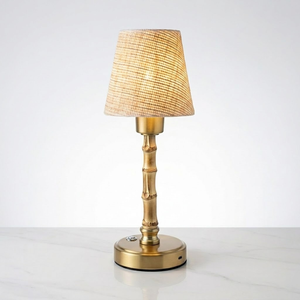
Rechargeable Hospitality Lighting Cordless LED Vintage Bamboo Design Luxury Table Lamp
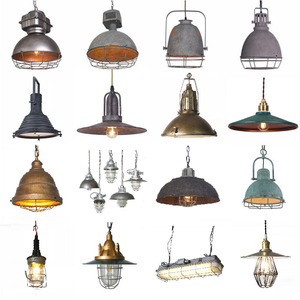
Vintage Industrial Pendant Light E27 Hanging Ceiling Lamp Retro Loft Lighting Fixture
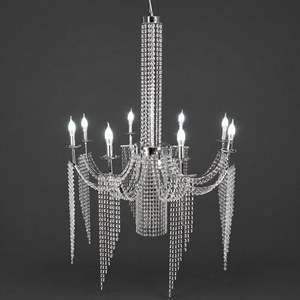
Modern Rectangle Glass Metal 8-Light Pendant Lamp Chrome/Gold Finish Warm/White Light
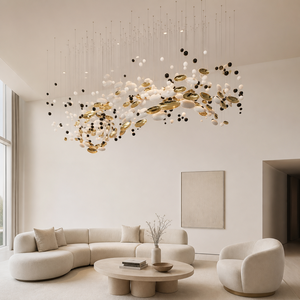
Modern Style Indoor Decoration Hotel Lobby Villa Staircase Custom Glass LED Chandelier
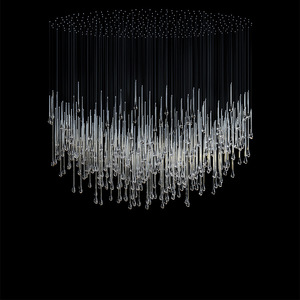
Customized Creative Long LED Pendant Light with Adjustable Height for Hotel Lobby & Villa
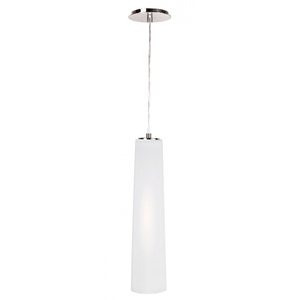
Marriott Residence Inn Possibilities Hotel Ceiling Lamp Guestroom King Double Queen Lighting
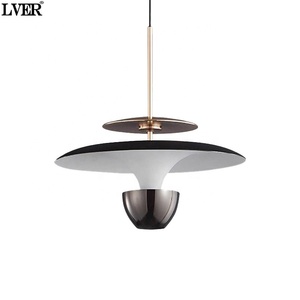
Modern Minimalist Restaurant LED Ceiling High Luminous Efficiency Raising Spotlight
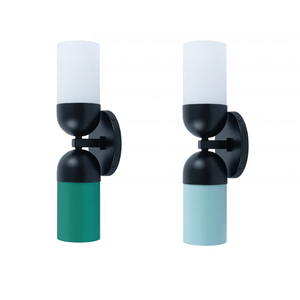
Home2 Dynamic Hospitality Lighting Two Light Cylinder Acrylic Guest Room Wall Sconce
Sourcing Custom Architectural Lighting from China: The Technical & Strategic Benchmark
An engineering guide for procurement directors, interior architects, and lighting specifiers navigating custom manufacturing, DFM protocols, and quality assurance.
The global commercial lighting landscape has evolved dramatically over the past decade. Sourcing custom decorative fixtures, grand lobby chandeliers, and architectural metal light installations from top Chinese factories is no longer merely a cost-efficiency strategy—it is a critical imperative for achieving high-precision engineering, rapid prototyping, and sophisticated material integration at scale. Modern China lighting manufacturers have transitioned from high-volume OEM producers into advanced design-engineering powerhouses capable of delivering complex, bespoke installations for luxury hospitality brands such as Marriott, Hilton, Hyatt, and Ritz-Carlton.
1. Design for Manufacturability (DFM) & Structural Engineering
Translating an architect's preliminary sketch or a reflected ceiling plan (RCP) into a structurally sound, code-compliant physical lighting fixture requires rigorous Design for Manufacturability (DFM). Leading custom lighting factories in China employ multi-disciplinary engineering teams fluent in AutoCAD, SolidWorks, and BIM/Revit workflows.
Critical DFM benchmarks include:
- Structural Load Calculations: For monumental multi-tiered chandeliers in hotel lobbies or atrium staircases, engineering teams perform Finite Element Analysis (FEA) to verify tensile strength, stress distribution, and canopy ceiling anchoring mechanisms under seismic and dynamic loads.
- Thermal Management & LED Lifespan: High-output LED chips generate significant heat. Advanced factories design custom extruded aluminum heatsinks and conduct thermal imaging simulations to guarantee junction temperatures stay below critical limits, ensuring an L80B10 operating lifespan exceeding 50,000 hours.
- Photometric & Optical Optimization: Precision reflector design, optical lens selection, and diffuser material tuning (such as frosted hand-blown glass or optical-grade acrylic) are validated using Goniophotometer testing to produce accurate IES/LDT files for lighting designer sign-off.
Architectural Metals
Precision laser cutting, CNC bending, and hand-patinated finishes in brass, bronze, stainless steel, and structural aluminum for high-end decorative screens and integrated light frames.
Custom Glass & Crystal
Hand-blown artisan glass, molded optical crystal drops, and slumped textured glass sheets tailored for optimal light refraction, dispersion, and atmospheric elegance.
Backlit Natural Stone
Translucent marble, onyx, and quartzite slabs precision-cut and paired with uniform, heat-dissipating LED backlighting arrays for reception desks and feature accent walls.
2. Regulatory Compliance & Global Electrical Certification Standards
A major vulnerability when sourcing custom lighting internationally is non-compliance with regional electrical and safety codes. Top-tier Chinese manufacturers operate certified internal testing laboratories and partner directly with third-party testing agencies like UL, Intertek (ETL), TÜV SÜD, and SGS.
| Target Region | Primary Certification Standards | Mandatory Engineering Criteria |
|---|---|---|
| North America (USA/Canada) | UL 1598, UL 2108, CSA C22.2, FCC Part 15 | Class 2 power supplies, UL-listed wiring/lampholders, strict junction box mounting alignment, Title 24 JA8 energy compliance. | European Union (EU) / UK | CE, EN 60598-1, EN 60598-2-1, UKCA, RoHS, REACH | Low Voltage Directive (LVD), Electromagnetic Compatibility (EMC), CE-marked flicker-free drivers, eco-design ERP compliance. |
| Middle East (GCC/Saudi Arabia) | SASO IECEE, GCC G-Mark, CB Scheme | High ambient temperature resistance (rated for 50°C+ operating environment), surge protection devices (10kV+), tropicalized PCB coatings. |
Specifiers must ensure that the custom manufacturer provides full CB Test Certificates, UL File Numbers, and comprehensive factory assembly test logs (hi-pot insulation test, grounding continuity test, and burn-in aging test) prior to packing and freight dispatch.
Integrated Engineering & Global Project Footprint
Combining North American and European design management with China's unmatched manufacturing capabilities.
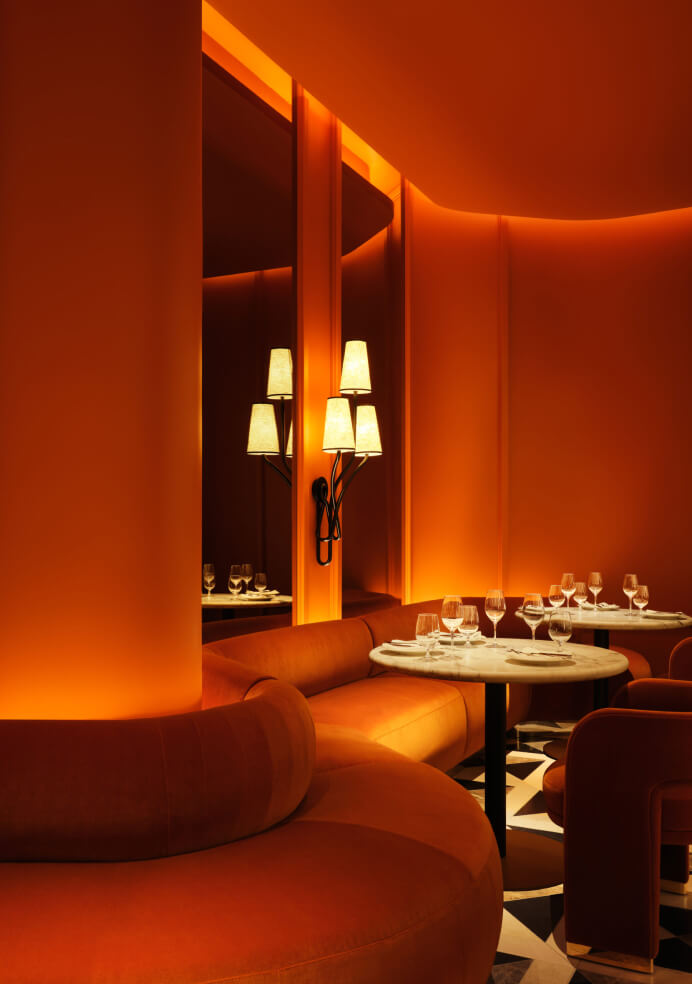
Bespoke Decorative Lighting Solutions
From grand lobby canopies to subtle guestroom wall sconces, our fully integrated manufacturing line bridges complex artistic concepts with structural safety and light performance.
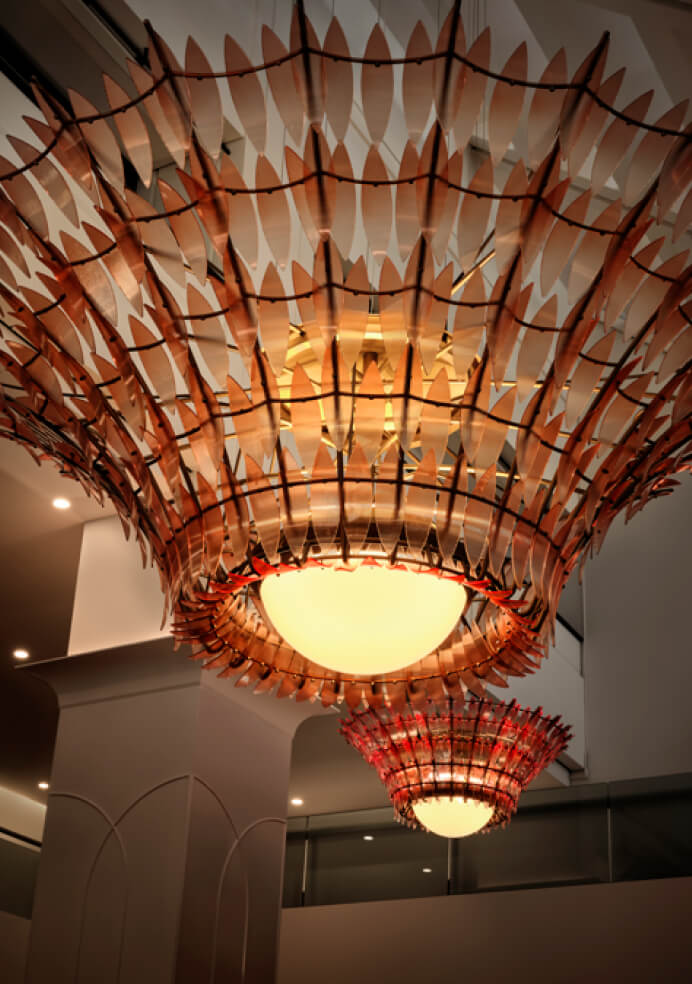
Architectural Metal & Polycarbonate Features
We fabricate decorative spatial partitions, metal light screens, and lightweight polycarbonate panels engineered to control ambient illumination, acoustic feel, and sightlines.
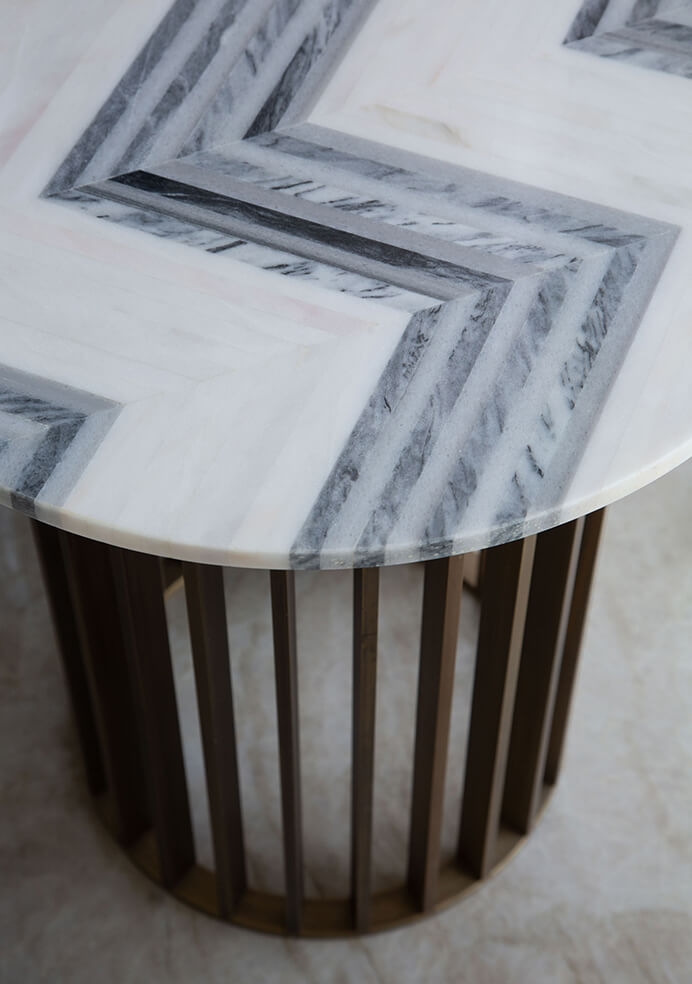
Backlit Natural Stone Feature Walls
Slab-matched marble, translucent onyx, and engineered stone integrated with custom LED backlight arrays, fully prepared for turnkey interior architectural mounting.
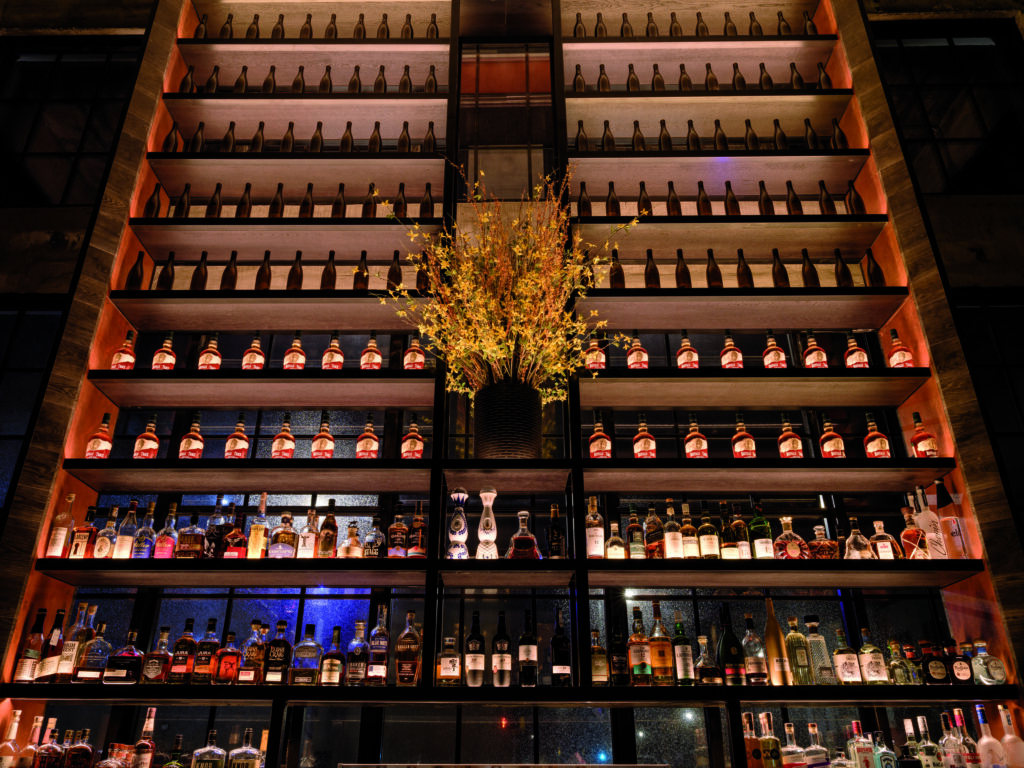
Global Hospitality Case Study: Amelia Gene
Floating crystal features under a mirrored ceiling canopy, designed by Johnson Studio at Cooper Carry and brought to fruition through precise manufacturing and pre-assembly testing.
Future Procurement Trends in Custom Commercial Lighting
Key technological shifts and strategic sourcing considerations transforming the custom lighting industry over the next five years.
1. Deep Integration of Smart Controls (DALI-2, Casambi & Matter Protocols)
The days of standalone non-dimmable light fixtures in commercial spaces are over. Future-proof custom lighting specification demands seamless integration into building management systems (BMS) and intelligent lighting control networks. Leading manufacturers now factory-install and pre-address intelligent drivers capable of DALI-2 multi-channel control, 0-10V smooth dimming to 0.1%, and wireless mesh integration via Casambi or Bluetooth SIG.
Tunable White technology (2200K to 6500K) with high Color Rendering Index (CRI > 95, R9 > 80) is becoming standard for luxury guestrooms and corporate lobbies to align with human-centric circadian rhythm lighting standards specified in WELL Building certifications.
2. Sustainable Materiality & Circular Design Engineering
Global procurement policies are prioritizing carbon footprint reduction and circular economy practices. Top Chinese custom lighting manufacturers are adopting sustainable sourcing and production methods:
- Low-VOC & Water-Based Finishes: Transitioning from traditional solvent-borne liquid paints to environmentally responsible powder coating and Eco-PVD (Physical Vapor Deposition) metal plating.
- Modular Component Design: Structuring complex chandeliers so that individual LED modules, drivers, and glass components can be serviced, upgraded, or recycled on-site without dismantling the entire fixture framework.
- Recycled & Bio-Based Polycarbonates: Utilizing post-consumer recycled acrylics and aluminum alloys with high recycled content to minimize embodied carbon in large-scale architectural light sculptures.
3. Virtual Prototyping & Digital Twin Delivery
To reduce sample turnaround times and physical air-freight waste, leading factories are implementing digital twin technology. Specifiers receive 3D photorealistic renderings, photometrically accurate DIALux/Relux lighting simulations, and AR (Augmented Reality) spatial preview files prior to physical mock-up fabrication. This reduces approval cycles from weeks to days.
Vendor Audit & Evaluation Matrix for Factory Selection
Use this standardized assessment framework when auditing potential custom lighting suppliers in China.
| Evaluation Pillar | Key Audit Criteria | Red Flags / Warning Signs |
|---|---|---|
| Engineering Capabilities | In-house SolidWorks/AutoCAD team, structural FEA analysis, thermal management modeling, custom PCB design. | Outsourcing basic shop drawings, inability to supply IES photometric files, no structural load documentation. |
| Quality Control (QC) | ISO 9001 certified, IQC/IPQC/FQC processes, 100% 48-hour burn-in aging racks, salt-spray plating testing. | Sampling-only inspections, lack of electrical testing equipment (Hi-pot, ground continuity) on site. |
| Project Management | Dedicated English-fluent project managers, weekly photographic progress reports, clear milestone schedules. | Unclear lead time commitments, poor communication on material lead times, unorganized submittals. |
| Packaging & Logistics | Custom reinforced plywood crating, drop-tested foam packing, component labeling matching installation drawings. | Use of standard corrugated boxes for heavy glass/crystal, unorganized loose parts without clear tags. |
Frequently Asked Questions by Global Specifiers
Answers to common questions regarding custom lighting procurement, lead times, engineering, and logistics.
Can Chinese custom lighting factories manufacture fixtures directly from an artistic concept or rendering?
Yes. Premium custom manufacturers specialize in taking initial concept sketches, mood boards, or 3D interior renderings and executing full Design-for-Manufacture (DFM) engineering. This includes issuing detailed shop drawings, material finish samples, and structural assembly plans for final approval before mass production begins.
What are the standard lead times for custom hospitality lighting projects?
Standard lead times typically range from 2 to 3 weeks for engineering drawings and finish sign-off, 3 to 4 weeks for physical prototyping/mock-ups, and 6 to 8 weeks for final manufacturing depending on order scale and material complexity (e.g., custom blown glass or specialized hand-applied metal finishes).
How are electrical safety certifications (UL, CE, SASO) handled for bespoke, low-volume fixtures?
Experienced manufacturers use UL-recognized and CE-certified electrical components (lampholders, wiring, terminal blocks, LED drivers). For large custom installations requiring full job-site certification, factories can arrange Field Evaluation Services or ETL/UL On-Site Certification prior to shipment or upon installation at the job site.
How do factories prevent damage during international ocean or air freight?
Custom fixtures are packed using custom CAD-designed polyfoam molds, heavy-duty inner cartons, and fumigated solid plywood outer crates. Fragile glass or crystal components are packed individually with extra spare units included (typically 3% to 5% overage) to cover any unforeseen site mishaps during installation.
What engineering support is available for site installation?
Factories supply step-by-step color-coded assembly manuals, exploded view 3D diagrams, and detailed wiring schematics. For major commercial or hospitality installations, engineering supervisors can be dispatched on-site to guide electrical contractors during unboxing, mounting, and system commissioning.
Ready to Engineer Your Custom Lighting Package?
Connect with our global design-engineering team today. Submit your CAD drawings, reflected ceiling plans, or preliminary design concepts for a detailed technical review, DFM consultation, and budget quotation.