High-End Restaurant Ambient Lighting shapes more than visibility. It influences appetite, comfort, conversation, and perceived value. A softly illuminated dining room can make linen appear warmer and food look more inviting. Harsh overhead light can flatten textures and expose every unwanted shadow. Guests notice the difference, even when they cannot explain it.
Lighting designer Richard Kelly famously described light as “the only medium that can create a sense of space without occupying it.” His observation remains highly relevant to contemporary hospitality design. Experienced restaurant teams use layered lighting rather than one bright fixture. Cove lights can wash walls gently. Pendant lamps can define individual tables. Carefully aimed accents can highlight plating without creating glare. Warm color temperatures often support intimacy, while controlled contrast gives the room visual depth.
Small details matter.
A polished glass should sparkle, not flash. Diners should read menus comfortably without squinting. Staff also need safe, clear paths between tables. These practical needs sometimes conflict with dramatic design. That tension deserves honest attention. A beautiful dining room may still feel uncomfortable if the lighting is too dim. Conversely, a technically efficient room may feel cold and forgettable.
The best High-End Restaurant Ambient Lighting responds to architecture, cuisine, service style, and guest expectations. It should change subtly throughout the evening, supporting arrival, dining, and departure. Designers must test real table settings, not rely only on digital renderings. Light behaves differently beside dark wood, polished stone, and reflective glass. Even expert planning can miss something. That is why observation, adjustment, and guest feedback remain essential.
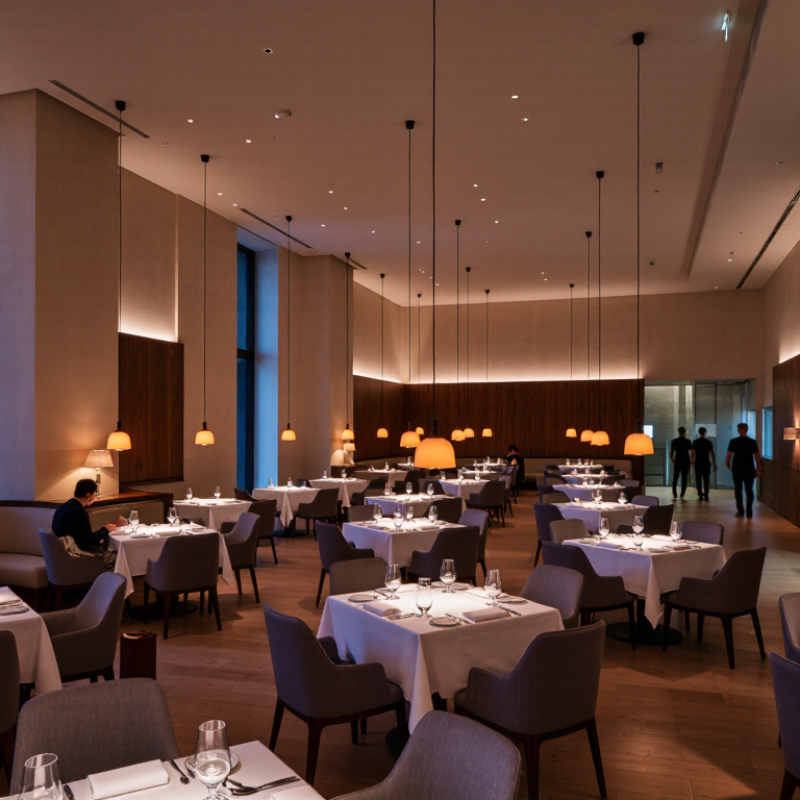
The Role of Ambient Lighting in High-End Restaurant Design
Ambient lighting shapes how guests read a high-end restaurant before tasting the first course. It controls mood, visual comfort, and the perceived value of the space. Warm, layered light can soften stone walls and make polished wood feel more welcoming. In contrast, harsh overhead lighting may flatten textures and expose every distraction. The room should breathe.
In high-end restaurant design, ambient lighting works as the quiet structure behind the dining experience. Designers often combine concealed ceiling fixtures, wall washing, and carefully placed decorative sources. A balanced system should illuminate faces without creating deep shadows beneath the eyes. It should also let guests see the food’s color accurately. Around 2700K to 3000K often creates warmth, but the best setting depends on materials, cuisine, and daylight conditions. Dimmable controls allow staff to adjust the atmosphere from early service to late evening.
Practical experience shows that small details matter. Light spilling onto a glossy table can create uncomfortable reflections. A bright corridor may also break the calm of a darker dining room. I once underestimated how strongly pale flooring could increase perceived brightness. The plan needed softer wall light, not simply lower intensity. That mistake remains useful. Lighting should be tested from seated eye level, across different tables, and during actual service hours. Comfort is difficult to judge from a drawing alone. Guest movement, staff visibility, maintenance access, and energy use must remain part of the design conversation.
How Ambient Lighting Shapes Guest Perception and Dining Comfort
In a high-end restaurant, ambient lighting quietly shapes how guests read the entire experience. Warm, balanced light can make polished tables feel inviting rather than distant. It also softens facial shadows, helping guests maintain comfortable eye contact. In my experience, diners stay longer when the room feels calm, not visually demanding. Lighting affects perceived temperature, privacy, and even portion appearance. A plate may look elegant under gentle side lighting, but flat under a harsh ceiling fixture.
Professional lighting design should support comfort before decoration. Designers often test brightness at different tables during service hours. Daylight, reflections, and candlelight can change the result dramatically. Too much contrast may create dark corners and uncomfortable glare. Too little contrast can make an expensive interior feel dull. This is where judgment matters. Perfect lighting does not exist for every guest. Older diners, photographers, and families may need different visual conditions, and restaurants sometimes overlook that.
Tips: Use dimmable layers instead of one bright source. Keep light near eye level soft and controlled. Check menus for glare before opening. Test skin tones, food colors, and table reflections together. Ask staff where guests squint or move their chairs. Small adjustments matter. A practical review after a busy service may reveal problems that a design meeting misses. Ambient lighting should disappear into the experience, yet its effects remain visible in relaxed faces, clear menus, and unhurried conversation.
Key Lighting Principles for Luxury Restaurant Interiors
Luxury restaurant interiors depend on lighting that feels effortless, not theatrical. Ambient lighting establishes the room’s emotional temperature, guides movement, and supports comfortable conversation. A warm color temperature, usually between 2700K and 3000K, can soften stone, timber, and textured fabrics. However, warmth alone does not create elegance.
Layering is essential. Concealed ceiling light can provide gentle coverage, while wall washing reveals artwork and architectural details. Focused table lighting should illuminate plates without creating harsh shadows on guests’ faces. High color rendering also matters, especially when fresh ingredients and carefully plated dishes need to appear natural. Keep glare away from diners’ eyes.
Control systems should allow staff to adjust scenes for lunch, dinner, and private events. Dimmers are practical, but poorly calibrated controls can produce uneven brightness or visible flicker. That detail is easy to miss. I would test every seat, not just the entrance and central tables. Reflections on glassware, polished stone, and cutlery may expose weaknesses during service. Lighting layouts should also respect local electrical, fire, and accessibility requirements.
A strong scheme leaves some areas quieter than others. Excessive brightness can flatten the room and weaken its sense of privacy. Yet very dark corners may make guests uncomfortable or affect safe navigation. The balance is not fixed; it changes with furniture, menu presentation, daylight, and staff movement. In practice, the best result often comes from reducing one unnecessary fixture rather than adding another.
Why Is High-End Restaurant Ambient Lighting Important?
Key Lighting Principles for Luxury Restaurant Interiors
A balanced luxury restaurant lighting scheme uses softer ambient illumination for comfort, brighter task lighting where food and service must be clearly seen, and carefully controlled accent lighting to guide attention toward architectural and decorative details. The values below are representative target illuminance levels in lux used in hospitality lighting design; the final specification should be adapted to finishes, daylight, ceiling height, and local standards.
The Influence of Lighting on Food Presentation and Brand Identity
Why Is High-End Restaurant Ambient Lighting Important?
The Influence of Lighting on Food Presentation and Brand Identity
Ambient lighting shapes how guests read a dish before tasting it. In my experience, soft, controlled light makes sauces look smoother and vegetables appear more vibrant. A warm tone can suggest comfort, while neutral light often reveals freshness and detail. The difference is subtle.
It also affects food photography at the table. Harsh overhead fixtures create deep shadows inside bowls and flatten delicate textures. Diffused light gives grilled fish a clearer surface and helps glassware look polished. However, excessive warmth can distort colors. A tomato may appear richer than it really is. That is not always honest.
Lighting also builds a restaurant’s identity through repetition. Consistent brightness, contrast, and color temperature can make a dining room feel calm, intimate, or energetic. Experienced designers test these choices beside actual plates, not empty tables. They check faces, menus, tabletops, and reflective surfaces. Small errors matter.
I have seen beautiful interiors fail because guests could not read the menu comfortably. That weakness deserves attention. A reliable plan includes adjustable fixtures, low glare, and regular maintenance. Bulbs age. Materials change. Staff feedback can reveal problems that a design review misses. Good lighting supports the meal without competing with it.
Planning, Controlling, and Evaluating Restaurant Ambient Lighting
Why Is High-End Restaurant Ambient Lighting Important?
Planning restaurant ambient lighting begins with the guest experience, not the fixture list. A refined dining room needs enough light for menus, faces, and food details. It also needs shadow, warmth, and visual calm. Plan separate zones for tables, walkways, bars, and service areas. Warm light around 2700K to 3000K often supports an intimate atmosphere. High color rendering helps ingredients appear natural and appetizing. However, a beautiful plan can still fail during a busy dinner service.
Control matters because daylight, occupancy, and table turnover change throughout the day. Use dimming systems with simple, clearly labeled scenes. Staff should adjust lighting without searching through complicated controls. I recommend testing the room at lunch, sunset, and late evening. Record glare, reflections on glassware, dark corners, and uncomfortable brightness near windows. A table that looks elegant at 6 p.m. may feel gloomy at 10 p.m. Small problems become obvious when guests stay longer.
Tips: Keep light sources away from direct eye level. Check menus under the actual dining light. Test polished tables for distracting reflections. Ask servers whether they can read orders comfortably. Invite several guests to describe the atmosphere without prompting. Their comments may challenge the designer’s assumptions. Recheck the settings after furniture changes, because new finishes can absorb or reflect light differently. Some plans need revision. That is normal.
FAQS
Warm light between 2700K and 3000K often creates comfort around stone, timber, and textured fabrics. Warmth alone is insufficient.
Concealed ceiling light provides gentle coverage. Wall washing reveals artwork and architecture. Table lighting supports plates without harsh facial shadows.
Soft, controlled light can make sauces look smoother and vegetables appear brighter. Excessive warmth may distort colors. A tomato can look richer than reality.
High color rendering helps fresh ingredients and plated dishes appear natural. Guests notice subtle differences. So do photographers.
Keep glare away from diners’ eyes. Provide enough light for menus, faces, and food details. Very dark corners can affect navigation.
Yes. Staff may need different scenes for lunch, sunset, dinner, and private events. Controls should be simple and clearly labeled.
Test every seat, not only central tables. Check glassware, polished stone, cutlery, menus, faces, and dark corners under real service conditions.
Let some areas remain quieter than others. Excessive brightness removes privacy and weakens contrast. One fewer fixture may work better.
Servers may struggle to read orders, while guests may dislike reflections or gloomy tables. Their comments can challenge design assumptions. That is useful.
Conclusion
High-End Restaurant Ambient Lighting plays a vital role in creating an inviting, refined, and memorable dining environment. It establishes the atmosphere from the moment guests enter, influencing their perception of quality, comfort, and exclusivity. Carefully balanced light levels, color temperatures, shadows, and visual focus can make a space feel intimate without becoming dark or restrictive. Effective ambient lighting also supports smooth movement, relaxed conversation, and a comfortable dining experience throughout the meal.
In luxury restaurant interiors, lighting should complement the architecture, furnishings, and service style while enhancing the appearance of food and reinforcing the restaurant’s identity. Thoughtful planning includes selecting suitable fixtures, layering ambient, accent, and task lighting, and using controls to adjust brightness for different times and occasions. Regular evaluation is equally important, helping designers and operators refine the atmosphere, reduce visual discomfort, and maintain a consistent experience that reflects the restaurant’s intended character.
