Why Choose Custom Decorative Lighting Fixtures?
Lighting does more than brighten a room. It shapes movement, mood, and memory. A pendant above a dining table can make conversation feel warmer. A sculptural wall fixture can turn an empty hallway into a quiet focal point. Custom Decorative Lighting Fixtures allow these details to respond to a space instead of forcing a standard design into it.
Lighting designer Ingo Maurer once said, “I am not interested in making light objects, but objects that emit light.” His words explain the difference between decoration and considered illumination. Experienced manufacturers examine ceiling height, surface finishes, bulb temperature, glare, wiring access, and daily use before developing a fixture. These details matter.
Small choices matter.
A handcrafted brass finish may age beautifully, while an unsuitable coating can appear tired within months. A carefully positioned diffuser can soften harsh shadows across a dining table. The wrong scale, however, may overwhelm the room. That risk deserves honest attention.
Choosing Custom Decorative Lighting Fixtures also supports stronger visual identity. Hospitality spaces can express their brand through repeated forms, textures, and controlled light levels. Residential interiors can reflect personal taste without looking copied from a catalogue. Architects and designers may gain more freedom when dimensions, materials, and mounting systems are developed together.
Still, customization is not automatically better. It requires clear measurements, realistic budgets, qualified installation, and reliable performance testing. When artistic ambition meets practical expertise, lighting becomes more than an accessory. It becomes part of the architecture, carrying both purpose and personality.
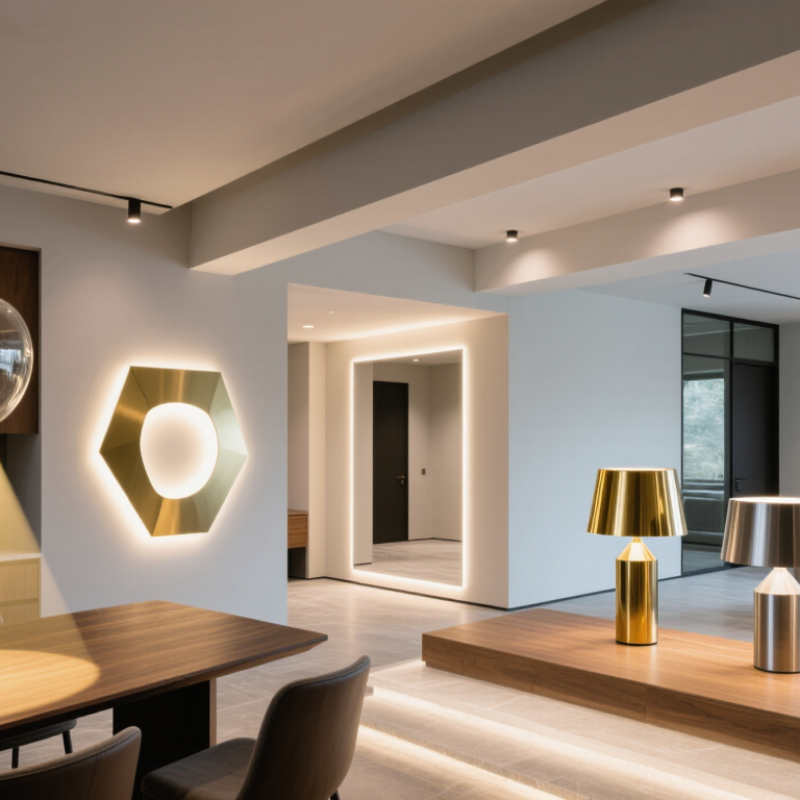
Why Choose Custom Decorative Lighting Fixtures?
Custom decorative lighting fixtures are purpose-built elements that combine illumination with visual identity. Unlike standard products, they can match a room’s dimensions, ceiling height, materials, and desired atmosphere. Their role is not merely decorative. They guide attention, support circulation, reduce glare, and shape how people experience a space.
A well-designed pendant can center a dining table, while a softly diffused wall fixture can make a narrow corridor feel calmer. In practical design reviews, the smallest details often matter: beam angle, color temperature, dimming range, and cleaning access. The International Energy Agency reports that lighting uses about 15% of global electricity. The U.S. Department of Energy states that LED products use at least 75% less energy and may last up to 25 times longer than incandescent lamps. Custom design can help apply these efficiencies more precisely, although savings depend on controls, operating hours, and installation quality.
Tips: Start with the task area, not the fixture shape. Specify glare control, replaceable components, and compatible dimmers. Request photometric data before approval. A beautiful fixture can still perform poorly. That is an uncomfortable but useful lesson. Material samples also deserve daylight testing, because finishes may appear warmer or colder at night. In some projects, the first concept looks perfect on paper and feels wrong in the room. Small revisions are normal. They often produce better light.
Custom decorative lighting fixtures are purpose-designed luminaires that combine visual character with functional illumination. Their role is to support ambience, highlight architectural details, define focal points, and distribute light according to the needs of a specific interior or exterior space.
The chart compares representative luminous efficacy values for common light-source technologies. Higher efficacy means that a light source produces more lumens of light per watt of electricity. Using efficient sources such as LEDs allows a custom fixture to deliver decorative impact while helping reduce energy use. Actual performance varies by product design, optics, operating conditions, and lamp quality.
Source: U.S. Department of Energy, Energy Saver, “Lighting Choices to Save You Money.”
Custom lighting designs can turn an ordinary ceiling into a memorable architectural feature. More importantly, they solve practical problems that standard fixtures often overlook. A tailored pendant can align with a dining table, preserve headroom, and direct light toward faces instead of polished surfaces. In practice, small details matter.
The U.S. Department of Energy reports that LED lighting uses at least 75% less energy than incandescent lighting and lasts up to 25 times longer. Custom LED fixtures can apply those savings without sacrificing visual character.
Professional customization also improves comfort and maintenance. Designers can specify beam angles, color temperature, color rendering, dimming systems, and glare control for each room. The Illuminating Engineering Society emphasizes these factors in professional lighting practice.
A layered scheme may combine soft ambient light, focused task light, and concealed accent light.
It feels calmer. It works harder.
Fixture dimensions can also support safer cleaning access and easier component replacement. That benefit is easy to miss during the mood-board stage.
There is a necessary compromise. The most dramatic fixture may not provide enough working light, while excessive brightness can create glare and wasted energy. The IEA has reported that lighting represents roughly 15% of global electricity consumption, making efficiency a serious design responsibility.
A reliable specification should include photometric data, estimated operating hours, controls, and maintenance requirements.
Beautiful is not enough. A thoughtful design may reveal its imperfections, but it should never hide poor performance.
Custom decorative lighting gives a room more than illumination. It creates a deliberate visual anchor.
Materials shape the fixture’s character. Brushed brass adds warmth, while powder-coated steel feels cleaner and more architectural. Hand-blown glass softens shadows and creates gentle pools of light across a dining table. Natural stone can add weight and texture, but its variation may challenge consistent production. That imperfection can be valuable.
Style should respond to the room’s proportions. A sculptural pendant suits a high ceiling, while a slim linear fixture works better above a narrow island. Layered lighting also improves usability. Combine ambient, task, and accent sources instead of expecting one fitting to do everything.
I usually check glare, color rendering, dimming performance, and maintenance access before approving a design. Details matter.
Energy performance deserves equal attention. The International Energy Agency reports that lighting uses about 15% of global electricity consumption. The U.S. Department of Energy states that LED lighting can use at least 75% less energy and last up to 25 times longer than incandescent lighting.
These figures support efficient choices, but efficiency alone cannot guarantee comfort. A cool, overly bright fixture may save energy while making a room feel harsh. Color temperature, beam angle, and diffuser design must work together. Some choices age badly. A custom fixture should express personality, yet remain practical enough for everyday living.
Custom decorative lighting begins with a conversation, not a catalogue. Designers study room dimensions, ceiling height, viewing angles, and daily use. A pendant above a dining table needs controlled light, while a lobby fixture may need stronger visual presence. Material samples follow: hand-finished metal, textured glass, stone, or responsibly sourced wood. Small details matter. A two-millimeter edge can change the fixture’s shadow.
The design team turns these observations into drawings, scaled models, and lighting calculations. They check proportions beside furniture, then test beam spread, glare, heat, and mounting access. Electrical components must match local requirements and the intended environment. A bathroom fixture needs suitable protection from moisture. A high ceiling may require safer installation planning. The first prototype is rarely right. Glass can feel too heavy, or the canopy may look oversized. That failure is useful.
Production combines digital precision with skilled handwork. CNC cutting can repeat complex shapes, while artisans refine seams and surface texture. Each part is measured before assembly, and wiring is inspected for secure connections. The finished fixture is tested for stability, illumination, and finish consistency. I have found that photographs cannot reveal every issue. A warm metal tone may shift under cooler lamps. Revisions are sometimes necessary, even after approval. Final adjustments may include a shorter stem, softer diffuser, or slightly warmer finish.
Why Choose Custom Decorative Lighting Fixtures?
Factors to Consider Before Making a Purchase
Custom decorative lighting can make a room feel intentional rather than merely furnished. Before ordering, measure the space carefully. Record ceiling height, table width, viewing angles, and nearby furniture. A fixture above a 180-centimeter dining table should provide balanced coverage without blocking conversation. Scale matters more than appearance in a showroom.
Check the light output, color temperature, dimming method, and bulb replacement process. Warm light near 2700–3000K often suits dining and living areas, while task zones may need brighter illumination. Confirm that the dimmer, driver, and electrical system are compatible. Ask for technical drawings, material samples, cleaning instructions, and installation requirements. A qualified electrician should review the wiring and applicable safety standards. Details protect both the room and the people using it.
Think about maintenance before choosing complex shapes or delicate finishes. Dust can collect inside narrow metalwork, and high ceilings may make cleaning expensive. Request a clear warranty, delivery schedule, and repair policy in writing. Custom production may also involve revisions, delays, or color differences between a sample and the final piece. That part is easy to underestimate. A beautiful sketch can still fail if the fixture creates glare, casts harsh shadows, or feels too large after installation. Examine a full-scale template when possible, and leave room for honest reconsideration.
| Decision Factor | Custom Decorative Lighting Fixtures | Standard Decorative Lighting Fixtures | What to Consider Before Buying |
|---|---|---|---|
| Design Flexibility |
High Dimensions, finishes, shades, mounting details, and decorative elements can be specified for the project. |
Limited The purchaser generally selects from available shapes, finishes, sizes, and configurations. |
Customization is most valuable when the room has unusual proportions, a defined design theme, or strict visual requirements. |
| Fit and Dimensions |
Project-Specific Can be designed around ceiling height, furniture placement, corridor width, and installation clearances. |
Predefined Available dimensions may not perfectly match the room or the intended visual scale. |
Measure the installation area carefully. Decorative fixtures should not obstruct movement, doors, sprinklers, or sightlines. |
| Material and Finish |
Selectable Materials and surface finishes can be coordinated with interior materials and the desired appearance. |
Preset Choices are restricted to the materials and finishes included in the available product range. |
Confirm durability, cleaning requirements, color consistency, corrosion resistance, and suitability for indoor or covered outdoor use. |
| Lighting Performance |
Configurable Light distribution, color temperature, brightness, dimming, and lamp or LED arrangement can be planned for the space. |
Predetermined Light output, beam spread, color temperature, and control options are based on the selected model. |
Review lumens, wattage, color temperature, color rendering, dimmer compatibility, glare control, and expected maintenance access. |
| Energy Efficiency |
Potentially Optimized The specification can balance illumination levels, LED efficiency, controls, and operating schedules. |
Model-Dependent Efficiency varies according to the fixture’s light source, driver, controls, and operating conditions. |
Compare lumens per watt, rated life, standby power, control compatibility, and the total cost of ownership rather than purchase price alone. |
| Lead Time |
Usually Longer Design review, sample approval, fabrication, finishing, testing, and quality inspection may add project stages. |
Usually Shorter Ready-made products may be available for immediate shipment, subject to stock and order quantity. |
Include design approvals, production time, shipping, installation, and possible replacement lead time in the project schedule. |
| Initial Cost |
Often Higher Engineering, prototyping, specialized materials, tooling, and low-volume production can increase upfront costs. |
Often Lower Repeated production and standardized components may reduce the initial unit cost. |
Obtain a detailed quotation covering design, samples, packaging, delivery, installation accessories, taxes, and applicable testing. |
| Installation Requirements |
May Require Planning Larger or heavier assemblies may need special supports, access equipment, multiple installers, or coordinated electrical work. |
More Predictable Standard mounting systems and documented dimensions can simplify preparation when conditions are typical. |
Verify fixture weight, mounting method, ceiling structure, electrical connection, access requirements, and local installation rules. |
| Maintenance and Replacement |
Specification-Dependent Maintenance can be straightforward when standard drivers, lamps, and accessible components are selected. |
Generally Simpler Replacement parts and installation instructions may be easier to identify for widely used configurations. |
Ask about component availability, warranty coverage, cleaning access, driver replacement, LED module replacement, and service documentation. |
| Compliance and Safety |
Must Be Verified A custom design requires confirmation that the complete assembly meets applicable electrical, fire, structural, and installation requirements. |
Usually Documented Standard products commonly have established technical documentation and installation instructions. |
Request relevant test reports, electrical ratings, ingress protection where applicable, flame or heat information, and installation guidance. |
| Best Application |
Distinctive Projects Suitable for hospitality interiors, feature spaces, special architectural conditions, and projects requiring a coordinated visual identity. |
Routine Requirements Suitable when the available dimensions, appearance, performance, and delivery schedule already meet the project needs. |
Choose custom lighting when design and fit justify the additional planning; choose standard lighting when speed, simplicity, and budget are the priority. |
Planning note: Actual cost, lead time, performance, and compliance depend on the fixture design, materials, quantity, installation environment, electrical requirements, and applicable local regulations.
It can turn an ordinary ceiling into a clear architectural feature. A tailored pendant can align with a dining table and preserve headroom. Small details matter.
Designers can control glare, beam angles, color temperature, and dimming. Soft ambient light can support relaxation, while task light helps with reading or cooking. One fixture rarely does everything well.
Efficient LED sources can use at least 75% less energy than incandescent sources. They may also last up to 25 times longer. Actual savings depend on operating hours and control settings.
Brushed brass adds warmth to a room. Powder-coated steel feels cleaner and more architectural. Hand-blown glass softens shadows across a dining table. Natural stone adds texture, but its variation may complicate production.
A sculptural pendant suits a high ceiling with generous open space. A slim linear fixture usually works better above a narrow island. An oversized design can feel impressive, then become visually tiring.
Combine ambient, task, and accent lighting for better flexibility. Ambient light fills the room, task light supports specific activities, and accent light highlights details. Layering feels calmer.
Review photometric data, estimated operating hours, dimming performance, and maintenance access. Check whether components can be reached without moving heavy furniture. Mood boards do not reveal everything.
A striking fixture may provide insufficient working light. Excessive brightness can create glare and waste energy. Beauty is not enough. A design should admit its limits and still perform reliably.
Custom Decorative Lighting Fixtures are purpose-designed lighting elements that combine practical illumination with visual character, helping define the atmosphere and identity of residential, commercial, and hospitality spaces. Unlike standard products, they can be tailored to a room’s dimensions, architectural features, lighting needs, and overall design concept. Their benefits include greater flexibility, improved visual balance, distinctive appearance, and the opportunity to create a cohesive environment through carefully selected forms, finishes, colors, and light distribution.
These fixtures may be produced from materials such as metal, glass, wood, stone, or fabric and can reflect styles ranging from contemporary and minimalist to classic or artistic. The process generally includes concept development, technical planning, material selection, prototyping, and careful production. Before purchasing, it is important to consider size, installation requirements, brightness, energy use, maintenance, durability, budget, and compatibility with existing electrical systems. Careful planning ensures the final fixture is both attractive and functional.