A luxury showroom is not simply a bright room. It is a carefully staged experience, where a warm pool of light can make a leather bag feel tactile and a narrow beam can reveal the grain of a watch strap. The best Luxury Retail Showroom Lighting supports both product and atmosphere without making either feel forced.
Lighting designer Richard Kelly’s influential vocabulary—“ambient luminescence,” “focal glow,” and “play of brilliants”—offers a practical starting point. These layers help designers balance comfortable background light, attention on key merchandise, and small moments of sparkle. Architect Louis Kahn captured light’s creative role in the words, “Light is the giver of all presences.” His sentence is poetic, but the retail lesson is concrete: light changes how materials, colors, and spaces are perceived.
This guide explores ten ideas, from layered illumination and high-quality color rendering to adjustable accents and concealed sources. It also considers glare on glass shelves, shadows beneath display plinths, and the difference between a flattering fitting area and an overlit one. Details matter. A perfect-looking concept can still disappoint when fixtures are poorly aimed or merchandise changes seasonally. Not every idea suits every brand, either. The aim is not to prescribe one look, but to help teams make deliberate choices, test them on real products, and refine the result before opening day.
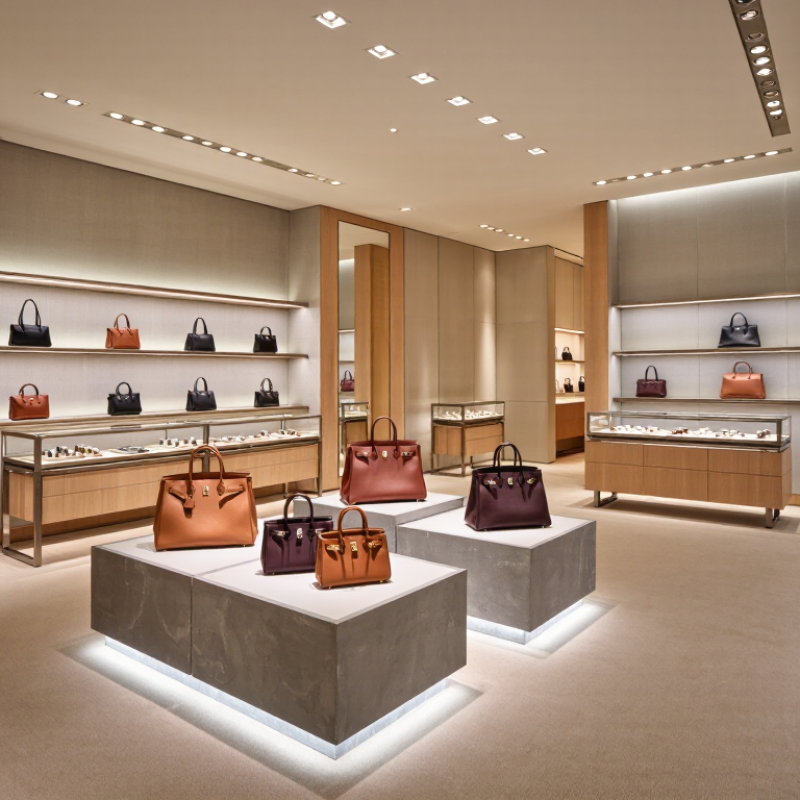
ANSI/IES RP-2-20 offers a useful framework for lighting retail spaces, including luxury showrooms. Treat it as design guidance, not a one-size-fits-all recipe. Start by identifying what visitors need to see: product color, surface texture, labels, and faces. Then layer general, accent, and task lighting to support those activities.
Picture a dark wool coat beneath a focused beam, with a softly lit wall behind it. The contrast draws attention, but excessive brightness can flatten texture or create glare on glass.
Check viewing angles from the entrance, seating areas, and fitting rooms. Use high-quality color rendering where accurate fabric and finish comparison matters. Keep transitions between brighter displays and quieter areas comfortable.
Small details matter.
Controls should allow staff to adjust scenes for daylight, events, and changing merchandise. Record fixture positions, aiming angles, and settings so adjustments remain consistent.
A mock-up can reveal problems that plans miss. It may also expose an awkward shadow on a display face. That happens.
Reassess the layout before installation, and verify the finished space under real operating conditions. RP-2-20 helps establish a disciplined basis, while the final design still depends on the merchandise, architecture, and people using the showroom.
Luxury retail lighting should make leather, silk, cosmetics, and skin tones appear believable under display light. Specify LED sources with a CRI of 90 or higher, then ask for IES TM-30-20 data. CRI is a useful threshold, not a full color-quality assessment. TM-30-20 reports fidelity as Rf and gamut shifts as Rg, helping reveal whether hues look muted or unusually vivid. A high Rf alone does not guarantee the exact effect a display needs. Small differences matter.
Compare the reports with physical samples: place a cream blouse, a deep-red bag, and a skin-tone reference beneath the proposed fittings. Check them beside the storefront glazing and under the showroom’s dimmed settings. Test it live. Ask the supplier for spectral data and confirm that adjacent fixtures render colors consistently. This matters when customers move between a display island and a fitting area. Be cautious with a single “best” number; the same source can flatter one material and distort another. Even a careful sample test has limits, so review the lighting again after installation, when surface finishes and surrounding light are real.
A luxury showroom feels considered when light guides the eye without announcing itself. Begin with soft ambient illumination that makes the room easy to read. Then add accent light to draw attention to a sculptural display, a textured wall, or a carefully arranged table. Display lighting should reveal materials honestly. A leather surface needs gentle, even light; polished metal benefits from controlled highlights. Keep color temperature consistent where possible, so neighboring products do not look strangely different. Small shifts matter.
Tips: Aim adjustable spotlights at merchandise, not directly into visitors’ eyes. Test the setup from seated and standing viewpoints. Check for glare on glass, mirrors, and glossy finishes. Keep it subtle.
Use dimming to adapt the atmosphere throughout the day, while preserving enough ambient light for comfortable movement. Leave darker areas intentionally, but avoid making corners feel neglected. A dramatic beam may look striking during installation and still flatten the product in person. Review the room at eye level, then move the fixture a few inches if shadows obscure key details. The first arrangement is rarely perfect. That is useful feedback.
Top 10 Luxury Retail Showroom Lighting Ideas
Use DOE LED Benchmarks: 75% Less Energy and Up to 25× Longer Life
In a luxury showroom, lighting should reveal texture without flattening it. Aim a warm, high-color-rendering spotlight across a leather chair, then soften nearby shelves with concealed linear lighting. The contrast makes materials feel tangible. It also helps customers distinguish subtle shades. DOE benchmarks offer a useful starting point: LED lighting can use at least 75% less energy and last up to 25 times longer than incandescent lighting. Actual savings and service life vary by product and use. Not every fixture will reach those figures.
Longer-lasting lamps can mean fewer replacements above tall displays and less disruption during trading hours. Still, efficiency alone does not guarantee beautiful light. Poor beam control can create glare on glass, while an incompatible dimmer may cause flicker. Test fixtures in the actual space, with merchandise in place, before committing to a full installation. A small sample display can reveal problems that plans miss.
Tips: Use narrow beams for hero pieces and softer, wider light for walkways. Check color consistency across fixtures. Keep drivers accessible for maintenance. Record energy use before and after upgrades; the result may be less dramatic than expected, and that is worth examining.
DOE LED benchmarks: 75% less energy and up to 25× longer life
The chart indexes incandescent lighting energy use at 100. At the DOE benchmark of 75% less energy, LED lighting uses 25 on the same index. DOE also reports that LED bulbs can last up to 25 times longer than incandescent bulbs. Actual savings and lifespan vary by product and use.
A luxury showroom needs more than bright displays. Start with a calm ambient layer, then use focused accent beams to reveal texture, shape, and finish. Light vertical walls, not only tabletops; otherwise, the room can feel oddly flat. For the first four ideas, balance general illumination, directional accents, vertical lighting, and carefully lit display niches. Keep beams off polished stone where possible. Reflections can compete with the merchandise.
Next, tune color temperature and color rendering to suit the materials. Warm light can flatter wood and leather, while cooler light may clarify crisp architectural details. Check colors in person; a specification sheet cannot show every surface interaction. Add glare control, adjustable track heads, dimming, and separate scene settings for opening hours or evening events. A flexible layout matters when displays change. Ten ideas, one practical test: does the product remain the visual center?
Energy use deserves equal attention. The U.S. Department of Energy reports that LEDs use at least 75% less energy and last up to 25 times longer than incandescent lighting. That comparison is useful, but it does not guarantee a successful installation. Poor aiming still wastes light. A simple mock-up, with a real product beneath the proposed beam, can expose hot spots and dull colors before fixtures are fixed in place. Even then, perfection is unlikely; some finishes behave differently under store lighting.
| No. | Lighting Idea | How to Apply It | Typical Starting Point | Key Design Benefit |
|---|---|---|---|---|
| 1 | Layered Ambient Lighting | Combine discreet ceiling-mounted downlights or indirect cove lighting to create a comfortable base layer before adding focused accents. | About 100–300 lux on the general sales floor; 2700–3000 K for a warm atmosphere. | Creates an inviting overall scene while leaving room for products and displays to stand out. |
| 2 | Focused Product Accent Lighting | Use adjustable spotlights or track-mounted fixtures to direct attention to featured merchandise. Aim carefully to limit glare and reflections. | Often 3:1 to 5:1 accent-to-ambient illuminance; select beam angles to suit the product and display size. | Builds visual hierarchy and makes featured pieces easier to notice. |
| 3 | Vertical Wall Washing | Illuminate display walls evenly with wall washers or carefully spaced directional fixtures, positioning them to reduce scallops and dark patches. | Approximately 150–300 lux on display walls; keep the light distribution even across the merchandise. | Makes the room feel more open and provides a clear backdrop for shelving and displays. |
| 4 | High-Color-Rendering Light | Specify quality LED sources with strong color rendering, and check product samples under the proposed lighting before installation. | CRI 90 or higher is a useful target for color-critical merchandise; evaluate red rendering where relevant. | Helps materials and product colors appear more natural and consistent. |
| 5 | Warm, Consistent Color Temperature | Choose a coordinated color temperature for the main sales areas, then use limited variations only where they support a clear display purpose. | About 2700–3000 K for a warm retail mood; consistency between nearby fixtures is essential. | Supports a cohesive atmosphere and reduces distracting color shifts. |
| 6 | Glare-Controlled Mirrors and Fitting Areas | Use soft, balanced vertical light near mirrors rather than relying on a single overhead source. Shield fixtures from direct view where possible. | Even facial illumination is more important than a single high illuminance target; avoid harsh shadows and visible hot spots. | Improves comfort and gives customers a more useful view of products and fit. |
| 7 | Display-Case Lighting | Place compact, shielded fixtures to illuminate merchandise without exposing customers to bright LED points or producing distracting reflections. | Set output according to the material and viewing distance; use low-heat, low-UV sources for sensitive objects. | Draws attention to small items while keeping the display refined and legible. |
| 8 | Flexible Track Lighting | Install adjustable track heads where displays change regularly, and provide aiming access so fixtures can be repositioned as layouts evolve. | Choose beam spreads to match the display; narrow beams suit small features, while wider beams suit larger surfaces. | Allows the lighting scheme to adapt without major ceiling changes. |
| 9 | Dimmable Scenes | Use compatible dimming controls to create distinct settings for opening hours, evening trade, events, and cleaning. | Confirm that drivers and controls are compatible across the dimming range; test for flicker and smooth operation. | Provides flexibility while helping maintain a comfortable, intentional mood. |
| 10 | Architectural Cove and Concealed Lighting | Hide linear fixtures in coves, shelves, or joinery details so the illuminated surface—not the light source—becomes the focus. | Use a continuous, well-diffused output and plan access for maintenance; avoid visible gaps and bright spots. | Adds depth and subtle emphasis without cluttering the visual field. |
Illuminance and color-temperature figures are typical design starting points, not universal requirements. Final specifications should account for merchandise sensitivity, surface reflectance, viewing conditions, energy use, and applicable local regulations.
It should reveal product colors, textures, labels, and faces. Start with what customers need to compare.
Combine general, accent, and task lighting. A focused beam can draw attention to a wool coat against a softly lit wall.
Check the display from the entrance, seating areas, and fitting rooms. Glass can reflect bright fixtures, and strong contrast may hide texture.
Choose sources with a CRI of 90 or higher. CRI is useful, but it does not tell the whole story.
It reports color fidelity and gamut shifts. These measures can help identify hues that look muted or unusually vivid.
Place real samples beneath the proposed fixtures. Compare a cream blouse, a deep-red bag, and a skin-tone reference.
Check samples beside storefront glazing and under dimmed settings. Colors can look different near windows or in fitting areas.
Controls should support changes for daylight, events, and new merchandise. Record fixture positions and settings for consistency.
It can expose awkward shadows that plans miss. That happens. Review the finished space under real operating conditions; the first test may not catch everything.
Luxury Retail Showroom Lighting combines technical standards with thoughtful design to make products look appealing and spaces feel welcoming. Begin by using ANSI/IES RP-2-20 as a framework for planning showroom illumination, then choose high-quality light sources with a color rendering index of 90 or higher. IES TM-30-20 can provide a more detailed way to assess how accurately lighting renders colors, helping merchandise appear clear and consistent.
A balanced mix of ambient, accent, and display lighting can shape the customer’s path, highlight important products, and add depth without overwhelming the space. The ten ideas also consider energy efficiency: DOE benchmarks indicate that LED lighting can use 75% less energy and last up to 25 times longer than traditional options. Together, these principles offer a practical foundation for creating refined, comfortable, and adaptable luxury showrooms.