0%

Natural Stone Interior Feature Walls are moving beyond luxury showrooms and hotel lobbies. They now appear in living rooms, reception areas, restaurants, and wellness spaces. Grand View Research estimated the global natural stone market at approximately USD 51 billion in 2022, with continued growth expected through 2030. That momentum reflects demand for durable, tactile, and visually distinctive interiors.

Yet market growth does not guarantee responsible sourcing. The U.S. Geological Survey’s Mineral Commodity Summaries and Natural Stone Institute guidance both emphasize material origin, processing, transportation, and long service life. These details matter. A six-metre limestone wall may look effortless, but its success depends on slab selection, substrate movement, moisture control, anchoring, and qualified installation. Small errors become expensive shadows, cracks, or uneven joints.

Architect Peter Zumthor wrote, “Materials have their own language.” His observation explains why stone cannot be chosen from a photograph alone. Veining, edge treatment, surface texture, and changing daylight must be experienced together. A credible 2026 sourcing strategy should therefore verify quarry documentation, fabrication standards, maintenance requirements, and environmental claims before approval. Product labels alone are not enough.

The choices are imperfect.

Some sustainability figures remain difficult to compare because reporting boundaries differ between suppliers. That weakness deserves attention. This guide examines how designers, contractors, and buyers can source Natural Stone Interior Feature Walls with stronger evidence, clearer specifications, and fewer aesthetic surprises. It also considers where reclaimed stone, regional materials, and honest lifecycle information may outperform fashionable selections.
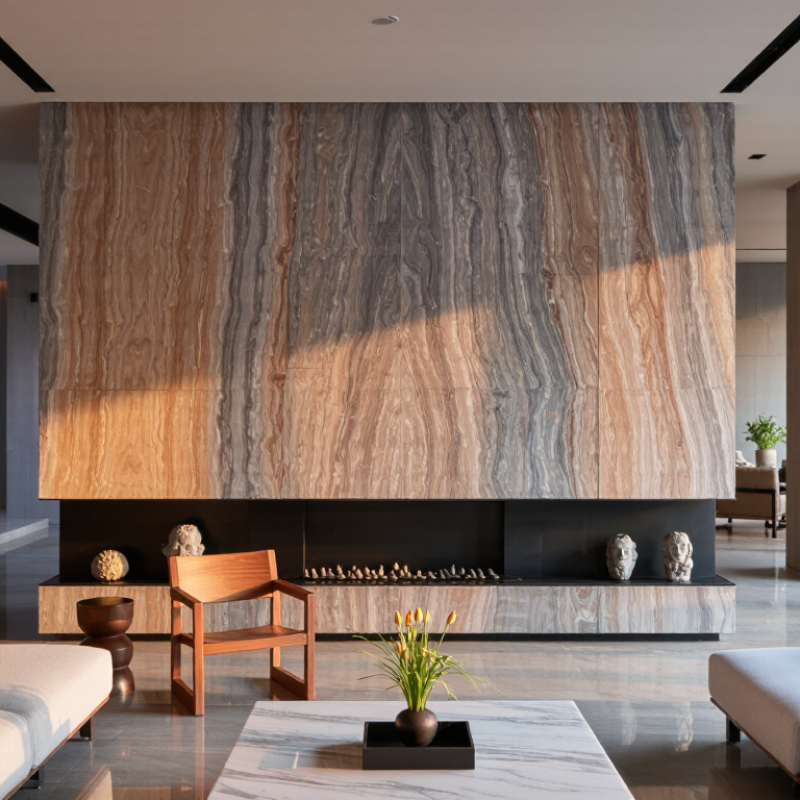
How to Source Natural Stone Interior Feature Walls 2026?

Define Natural Stone Feature Walls and Their Interior Applications

Natural stone interior feature walls are vertical surfaces designed to attract attention through texture, color, and geological character. Unlike ordinary cladding, each slab or tile carries natural variations, including veining, pores, mineral marks, and uneven tones. These details make a wall feel connected to the earth. They also prevent a space from looking overly manufactured.

Interior applications vary by room and purpose. In living rooms, stone can frame a fireplace or anchor a seating area. In entry halls, a textured wall creates a strong first impression without additional decoration. Bedrooms benefit from softer limestone or muted slate behind the headboard. Kitchens and dining rooms often use stone as a visual backdrop, but porous materials need careful sealing near food and moisture. Bathrooms require slip-resistant choices for floors and moisture-tested installation systems. Stone is heavy. The supporting wall must be assessed before sourcing begins.

A reliable sourcing process starts with samples viewed under the project’s actual lighting. Ask for quarry origin, thickness, finish, absorption data, and maintenance requirements. Experienced installers also review batch consistency because natural stone rarely matches perfectly. A small mismatch may become a design feature, though it can also disappoint clients expecting uniform panels. Large-format pieces reduce grout lines but increase handling risks and installation costs. Smaller modular units offer easier repairs and more flexible layouts. A thoughtful specification should include extra material for future replacement, since discontinued colors can be difficult to reproduce.

Set Design Goals, Stone Types, Colors, Textures, and Performance Needs

In 2026, sourcing a natural stone feature wall should begin with a clear design goal. Decide whether the wall should feel calm, dramatic, warm, or architectural. Measure the viewing distance, lighting direction, moisture exposure, and expected contact. A dark stone may absorb light in a narrow hallway. Pale limestone can brighten the room, but it may reveal stains more easily. Use full-size samples whenever possible. Small samples often mislead.

Stone selection should match both appearance and use. Marble offers expressive veining, while granite usually provides stronger resistance to impact and heat. Travertine creates a softer, layered surface, although its pores require careful filling and sealing. Slate brings natural variation and grip, but uneven pieces can complicate alignment. Ask suppliers for quarry origin, thickness tolerances, absorption data, slip information, and recent batch photographs. Documentation matters more than confident sales language.

Color should be reviewed under daylight, warm lamps, and evening shadows. Texture also changes visually; split faces create depth, while honed surfaces appear quieter. Confirm the substrate, adhesive compatibility, fixing method, and load capacity with qualified installers. Performance needs include cleaning, moisture control, fire behavior, and long-term maintenance. Some walls will age beautifully. Others may look tired faster than expected. That possibility deserves honest discussion before ordering. Keep spare pieces from the same batch, because future matching can be surprisingly difficult.

Evaluate Suppliers, Samples, Certifications, Pricing, and Delivery Options

How to Source Natural Stone Interior Feature Walls in 2026

Sourcing a natural stone feature wall requires more than choosing an attractive photograph. I begin by evaluating suppliers through completed projects, technical documents, and consistent communication. A reliable supplier should provide quarry origin, stone composition, thickness options, and installation guidance. Ask whether the material is suitable for interior humidity, heating systems, and the wall’s structural load. Certifications can support responsible sourcing, but they require verification. Check certificate numbers, issuing organizations, test dates, and whether the documents apply to the actual stone.

Tips: Order several samples. View them beside your flooring and lighting. Natural stone changes under warm and cool bulbs. Inspect the back, edges, pores, and surface repairs. Record sample codes. Photograph them in daylight.

Pricing should include stone, finishing, cutting, packaging, freight, insurance, taxes, and installation preparation. A low quotation may exclude important costs. Request a line-by-line breakdown and confirm whether replacement pieces are available. Delivery options may include full slabs, cut panels, or modular pieces. Compare lead times, crate protection, unloading requirements, and damage procedures. I prefer written approval samples before production, because color variation can be wider than expected. Even then, perfect uniformity is unrealistic. That is worth explaining to clients early. Some suppliers provide sustainability statements, but these can be vague. Ask for evidence, not polished language. Never approve based on images alone.

How to Source Natural Stone Interior Feature Walls 2026? - Evaluate Suppliers, Samples, Certifications, Pricing, and Delivery Options
Stone Type Typical Appearance & Best Use Common Interior Thickness Typical Water Absorption Recommended Finish Indicative Material Price
(USD/m²)
Sample Evaluation Points Typical Production Lead Time Key Documents to Request
Limestone Soft, warm, and uniform; suitable for calm residential walls, hospitality interiors, and reception areas. 10–20 mm for adhered panels; 20–30 mm for heavier or larger-format pieces. Approximately 1–15%, depending on density and geological type. Honed, brushed, tumbled, or split-face. $45–$140 Check fossil distribution, open pores, edge integrity, shade variation, and reaction to the proposed sealer. 3–7 weeks for standard finishes; longer for custom sizes. Technical data sheet, water-absorption test, origin statement, batch photographs, and installation guidance.
Marble Distinctive veining and polished appearance; suited to feature walls, fireplaces, lobbies, and luxury interiors. 12–20 mm for panels; 20 mm or more where large pieces require additional rigidity. Approximately 0.1–2.5%, varying by variety and finish. Honed for lower reflection; polished for maximum visual contrast; leathered for texture. $80–$350+ Compare vein direction, resin-filled fissures, slab continuity, pinholes, staining, and acid sensitivity. 4–8 weeks; book immediately for rare colors or matched layouts. Petrographic description, test results, slab inspection images, care instructions, and written variation tolerance.
Granite Hard, durable, and visually granular; appropriate for high-traffic walls, commercial interiors, and fireplace surrounds. 12–20 mm for most interior cladding; thicker sections may be required for mechanical fixing. Typically 0.1–1.5%. Polished, honed, flamed, or leathered; flamed texture is generally more common outdoors. $60–$220 Review grain orientation, mineral spots, fissures, flatness, edge chipping, and panel weight. 3–6 weeks for stocked colors; 6–10 weeks for special finishes. Density, flexural-strength data, abrasion information, country-of-origin statement, and packing specification.
Slate Layered, matte, and naturally textured; useful for earthy interiors, media walls, hotel corridors, and rustic-modern schemes. 8–15 mm for thin veneer; 15–25 mm for thicker split-face panels. Approximately 0.2–3.0%. Natural cleft, calibrated cleft, brushed, or lightly honed. $35–$130 Check delamination, layer stability, thickness consistency, loose flakes, and color changes when wet. 3–6 weeks; custom modular patterns may require 6–8 weeks. Water absorption, freeze-thaw data where relevant, handling instructions, sealer compatibility, and installation details.
Travertine Porous, layered, and warm; suitable for Mediterranean, natural, spa, and hospitality concepts. 12–20 mm for filled tiles or panels; 20–30 mm for robust split-face elements. Approximately 2–15% before filling and sealing. Honed and filled for a clean surface; unfilled or brushed for a more rustic effect. $40–$160 Assess void size, filler quality, vein continuity, corner strength, porosity, and stain resistance. 3–7 weeks depending on filling, sizing, and surface treatment. Absorption report, filler and resin declaration, sealer recommendation, care schedule, and installation method statement.
Quartzite Highly crystalline with dramatic movement; suited to premium feature walls and statement interiors. 12–20 mm for adhered installations; verify structural requirements for large panels. Generally below 1.5%, but values vary by geological composition. Polished, honed, leathered, or brushed. $100–$400+ Confirm that the material is genuine quartzite, then inspect translucency, mineral seams, fissures, and slab matching. 5–10 weeks for selected slabs and book-matched layouts. Petrographic report, flexural strength, absorption results, slab inventory, and written disclosure of resin treatment.
Procurement notes: Price ranges are indicative 2026 material-only estimates in USD per square metre and normally exclude design, fabrication, crating, freight, duties, tax, installation, substrate preparation, adhesive, and sealing. Natural-stone properties vary by quarry block, geological classification, finish, and production batch. Request a project-specific quotation, current batch photographs, physical samples, test reports, and written confirmation of acceptable shade and veining variation before placing an order.

Plan Measurements, Structural Support, Installation Methods, and Site Conditions

Sourcing a natural stone interior feature wall begins with accurate measurements. Record wall height, width, openings, corners, and ceiling changes. Do not trust rough dimensions alone. A six-millimeter error can disrupt the entire layout. Create a scaled elevation and mark visible joints before ordering stone. I recommend checking the finished floor level, too. It often differs from the original drawing. Request samples showing actual color variation, veining, thickness, and surface texture. One sample rarely represents the whole batch.

Structural support must match the stone’s weight and fixing method. Consult a qualified structural professional when the wall is tall, heavy, or attached to unusual framing. Inspect the substrate for movement, moisture, cracks, and weak plaster. Reinforce inadequate surfaces before installation. Direct bonding may suit lightweight, stable stone on prepared masonry. Mechanical anchors or a support frame may be safer for heavier panels. Use compatible fixings and allow movement joints where the design requires them. Guesswork is expensive.

Site conditions can change the specification. Confirm indoor humidity, temperature, ventilation, and access routes before delivery. Stone should arrive protected, labeled, and stored off the floor. Keep pieces away from standing water and construction dust. Dry-lay the panels when possible. This reveals shade changes and helps balance the pattern. I once approved a layout too quickly and missed a strong vein near eye level. It looked acceptable on paper, but not in the room. Recheck lighting, socket positions, edge details, and cleaning access before final fixing.

How to Source Natural Stone Interior Feature Walls in 2026

Plan measurements, structural support, installation methods, and site conditions before ordering. The chart shows the approximate self-weight of natural stone panels at common thicknesses, calculated using a representative stone density of 2,700 kg/m³.

Approximate panel weight is calculated as thickness × 2,700 kg/m³: 20 mm = 54 kg/m², 30 mm = 81 kg/m², 40 mm = 108 kg/m², and 50 mm = 135 kg/m². Confirm the actual stone density, wall dimensions, fixing system, substrate capacity, access conditions, and required movement joints with a qualified designer or structural engineer before installation.

Inspect the Completed Wall and Maintain Its Appearance Over Time

After installation, inspect the wall under daylight and warm artificial lighting. Different light can reveal uneven tones, scratches, or missed grout haze. Check every slab or veneer piece for cracked edges, loose sections, excessive lippage, and open joints. Use a straightedge, moisture meter, and soft inspection light. Natural Stone Institute guidance recommends confirming substrate preparation, joint treatment, and cleaning procedures before acceptance. ASTM C1528 also emphasizes documenting stone characteristics and installation conditions.

Record the stone type, batch, finish, cleaning solution, sealer, and inspection date. Keep photographs beside doorways, corners, and areas near sinks. These locations usually show wear first. The USGS Mineral Commodity Summaries 2025 reported approximately 1.7 million metric tons of U.S. dimension-stone production in 2024. That scale reflects a varied material stream, not a uniform product. Maintenance must follow the stone’s porosity and finish.

Clean dust with a pH-neutral product and a soft microfiber cloth. Avoid acidic cleaners, abrasive pads, and untested household sprays. Recheck moisture or darkening after spills, especially on limestone and marble. Resealing should follow absorption tests, not an automatic calendar. Some marks will remain. That is part of the material’s character, though careless cleaning can make them permanent. A quarterly visual check and an annual professional review are practical controls. Repair small joint failures early, before water reaches the substrate.

FAQS

What should I decide before sourcing a natural stone feature wall?

Define the desired mood, viewing distance, lighting, moisture exposure, and expected contact. Calm, dramatic, warm, or architectural?

Which stone types suit different interior needs?

Marble offers expressive veining. Granite usually resists impact and heat better. Travertine feels softer, but its pores need filling and sealing.

Can small samples accurately show the finished wall?

Not always. Use full-size samples when possible. Small pieces may hide variation, texture, and color changes.

How should I review stone color and texture?

View samples in daylight, warm light, and evening shadows. Split faces add depth, while honed surfaces appear quieter.

What technical information should suppliers provide?

Request quarry origin, composition, thickness tolerances, absorption data, slip information, and recent batch photographs. Documentation matters.

How can I compare supplier quotations fairly?

Ask for line-item pricing covering stone, finishing, cutting, packaging, freight, insurance, taxes, and installation preparation.

What should I check when evaluating certifications?

Verify certificate numbers, issuing organizations, test dates, and whether the documents apply to the actual stone. Do not rely on labels alone.

Which delivery details require attention?

Compare lead times, crate protection, unloading needs, and damage procedures. Full slabs, cut panels, and modular pieces behave differently.

Why are approval samples important before production?

Natural variation can exceed expectations. Written approval records the accepted appearance, though perfect uniformity remains unrealistic.

What should happen if matching pieces are needed later?

Keep spare pieces from the same batch. Future matching can be surprisingly difficult, and my earlier assumptions may be wrong.

Conclusion

Natural Stone Interior Feature Walls can transform an indoor space by adding depth, texture, color, and a lasting connection to nature. This guide explains how to define the wall’s purpose and select suitable stone types, finishes, colors, and patterns based on the desired design style and performance requirements. It also highlights the importance of comparing suppliers, reviewing physical samples, confirming certifications, understanding pricing, and evaluating delivery schedules before making a purchase.

Successful sourcing also depends on careful planning. Measure the installation area accurately, assess structural support and site conditions, and select an installation method appropriate for the stone and interior environment. After completion, inspect the wall for alignment, surface quality, secure attachment, and consistent appearance. Regular cleaning, suitable maintenance products, and periodic checks can help preserve the stone’s beauty and performance over time.

Ethan Anderson

Ethan Anderson

Ethan Anderson is a dedicated marketing professional with a deep understanding of the company’s products, customer needs, and evolving market trends. Through years of experience in strategic communication, content development, and audience engagement, he helps transform complex product information......