0%

Choosing China’s best Hospitality Lighting Installations supplier requires more than comparing catalog prices. Hotels, resorts, restaurants, and cruise facilities need lighting that supports comfort, identity, safety, and daily operations. A bright lobby may look impressive in photographs, yet create glare for guests and staff. Details matter.

Experienced suppliers understand these practical differences. They review ceiling heights, room layouts, local climate, operating hours, and interior materials before suggesting fixtures. Their teams should discuss color rendering, color temperature, beam angles, dimming systems, emergency lighting, and maintenance access. A reliable manufacturer also provides clear photometric data, samples, installation guidance, and documented quality testing. Certifications should be verified for the target market, not simply displayed in a brochure.

Strong Hospitality Lighting Installations begin with collaboration between designers, engineers, contractors, and hotel operators. Mock-up rooms can reveal shadows, unwanted reflections, and uncomfortable brightness before full production. That step is often underestimated. Not every project succeeds. Even a technically correct design may feel cold, uneven, or difficult to service.

This guide examines how to evaluate Chinese lighting suppliers through manufacturing experience, technical capability, customization, quality control, communication, delivery performance, and after-sales support. It also considers practical warning signs, including unclear warranties, inconsistent product samples, vague compliance claims, and limited replacement planning. The best supplier is not always the cheapest. It is the partner that can explain decisions clearly, document performance, and respond responsibly when real-world conditions expose weaknesses. Reliability must be demonstrated over time.
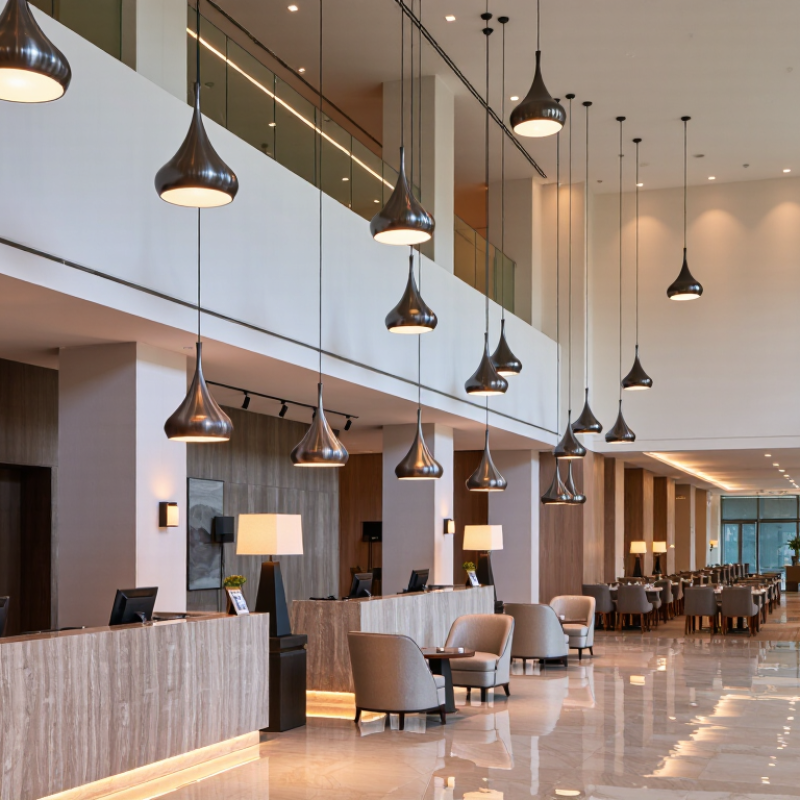
China Best Hospitality Lighting Installations Supplier?

What Defines a Leading Hospitality Lighting Installation Supplier in China?

China Best Hospitality Lighting Installations Supplier?

What Defines a Leading Hospitality Lighting Installation Supplier in China?

A leading supplier combines design knowledge, site experience, and dependable project control. Hospitality lighting is not only about attractive fixtures. It must support comfort, safety, maintenance, and the property’s visual identity. In a hotel lobby, warm 2700K light can create calm, while high-CRI sources reveal fabric and wood accurately. A supplier should provide photometric data, mock-ups, wiring guidance, and clear installation drawings. These details reduce surprises during construction.

On-site experience matters. Ceiling height, reflective stone, narrow corridors, and dimming systems can change the final effect. I have seen a beautiful lighting plan fail because glare reached the reception desk. Another project needed more access panels after maintenance became difficult. Those mistakes deserve review, not excuses. Reliable suppliers test key areas before full production and document beam angles, lux levels, controls, and replacement procedures. They also coordinate with architects, electricians, and local safety requirements.

Tips: Request a sample room or full-scale mock-up before approval. Check glare from guest eye level, not only from the floor plan. Confirm delivery schedules, installation supervision, warranty terms, and spare-part availability. Ask for written responses when technical changes occur. Small details matter. A capable supplier should explain limitations honestly, because no lighting solution fits every hospitality space perfectly.

What Defines a Leading Hospitality Lighting Installation Supplier in China?

A capable hospitality lighting installation supplier should understand the maintained illuminance requirements of different hotel and hospitality spaces, while also coordinating lighting quality, comfort, energy efficiency, and installation consistency. The reference levels below reflect commonly used hospitality lighting design targets; final values should be confirmed according to the applicable project standard and local regulations.

Key Services Offered by China’s Hospitality Lighting Specialists

China’s hospitality lighting specialists provide more than fixtures. They support the project from concept to final commissioning. Experienced teams study room functions, ceiling heights, guest movement, and local lighting requirements. They then create layered schemes for lobbies, guest rooms, restaurants, corridors, and outdoor areas.

Key services include lighting layouts, photometric calculations, product selection, mock-up samples, and customized fixture development. Suppliers can adjust beam angles, color temperatures, finishes, and control systems for each space. They also coordinate with interior designers and electrical contractors. Factory inspections, aging tests, and quality checks help reduce installation risks. However, a polished sample does not guarantee a perfect site result. Cable routes, ceiling changes, and delivery delays can still affect the outcome. Reliable suppliers respond with revised drawings and practical installation guidance.

Tips: Request a room mock-up before mass production. Test light levels beside actual materials, not only on screen. Confirm dimming compatibility early. Keep spare drivers and documented wiring plans. Ask for clear delivery dates and inspection records. A useful supplier should explain limitations honestly, not promise everything. Small mistakes during review can prevent expensive replacements later.

Lighting Solutions for Hotels, Restaurants, Resorts, and Public Spaces

China Best Hospitality Lighting Installations Supplier?

Hotels, restaurants, resorts, and public spaces demand more than attractive fixtures. They need lighting that guides movement, supports comfort, and survives daily operation. An experienced China-based supplier should understand guest rooms, dining areas, lobbies, corridors, landscapes, and service zones. Each space needs a different visual rhythm. Warm bedside light can feel restful, while a lobby needs clear vertical illumination. Public paths require even, glare-controlled lighting. Small details matter.

Professional installation begins with site surveys, ceiling measurements, voltage checks, and photometric calculations. The team should review color temperature, beam angles, dimming, emergency routes, and maintenance access. In restaurants, accurate color rendering helps food look natural. In resorts, weather-resistant fittings protect terraces and poolside areas. For public spaces, low glare and reliable controls improve safety and energy management. A trustworthy supplier provides drawings, samples, testing records, and practical commissioning support. Ask for clear warranties and replacement procedures.

Real projects rarely follow the first plan perfectly. A ceiling may hide a pipe, or a surface may reflect more light than expected. Good installers adjust without losing the design intent. Simple control systems are often easier for staff to operate. Still, every project deserves a second review after opening. Guests notice harsh shadows quickly. They also notice when a space feels calm, even if they cannot explain why. Reliable hospitality lighting is built through careful measurement, honest communication, and patient on-site decisions.

China Best Hospitality Lighting Installations Supplier? - Lighting Solutions for Hotels, Restaurants, Resorts, and Public Spaces
Application Area Recommended Maintained Illuminance Typical Color Temperature Color Quality Lighting Solution Protection and Control Requirements Key Installation Considerations
Hotel Reception and Lobby 200–300 lux on horizontal surfaces; higher levels may be used at reception desks. 2700–3500 K CRI ≥ 80; CRI ≥ 90 is preferred for premium interiors and artwork. Layered lighting with decorative pendants, recessed downlights, wall washing, and concealed cove lighting. Dimming, scene control, occupancy sensing, and daylight integration where applicable. Use glare-controlled optics and highlight architectural features without creating reflections on reception screens.
Guest Rooms 100–200 lux for general lighting; 300–500 lux for reading or task areas. 2700–3000 K CRI ≥ 80; CRI ≥ 90 is suitable for accurate skin tones and finishes. Bedside reading lights, indirect ceiling light, wardrobe lighting, bathroom mirror lighting, and accent lighting. Independent switching or scene presets; low standby power; suitable dimming compatibility. Provide separate controls for bedside, entry, vanity, and general lighting. Avoid direct glare from ceiling fittings when guests are lying down.
Hotel Corridors and Lift Lobbies 100 lux is a common maintained target for circulation areas. 2700–3500 K CRI ≥ 80 Recessed downlights, continuous linear lighting, wall grazing, and illuminated wayfinding elements. Occupancy or scheduling control; emergency lighting designed separately according to local regulations. Maintain uniformity, reduce flicker, and coordinate fixture locations with doors, signage, fire equipment, and ceiling services.
Restaurant Dining Area 100–200 lux for comfortable dining; localized task lighting may be higher. 2200–3000 K CRI ≥ 90 is recommended for food presentation and interior materials. Dimmable pendants, decorative luminaires, table lighting, wall sconces, and adjustable accent spotlights. Scene-based dimming for breakfast, lunch, dinner, cleaning, and events. Use glare-free light sources and high color quality. Coordinate pendant height with sightlines and table layouts.
Commercial Kitchen and Food Preparation 500 lux is a common target for detailed food preparation and cooking tasks. 3500–5000 K CRI ≥ 80; low-flicker products are recommended. Sealed linear or panel luminaires with high uniformity and easy-to-clean surfaces. Typically IP44 or higher; use higher protection where water jets, steam, or intensive cleaning are present. Select corrosion-resistant housings, food-service-compatible materials, impact resistance, and heat-tolerant components.
Conference and Meeting Rooms 300–500 lux for meetings, presentations, and note-taking. 3000–4000 K CRI ≥ 80; CRI ≥ 90 is useful for video conferencing. Direct/indirect linear systems, recessed panels, wall washing, and presentation lighting. Multiple dimming zones, daylight sensors, occupancy sensors, and presentation scenes. Control glare on displays and cameras. Keep vertical facial illumination balanced for video meetings.
Retail, Lounge, and Public Amenity Areas 200–500 lux, depending on merchandise, visual tasks, and desired atmosphere. 2700–3500 K CRI ≥ 90 is preferred for merchandise and decorative finishes. Track spotlights, adjustable downlights, shelf lighting, wall washing, and decorative feature lighting. Dimming and separate accent-lighting circuits; emergency lighting coordinated with the layout. Use adjustable beam angles and layered illumination to create focal points while maintaining safe circulation.
Spa, Wellness, and Treatment Rooms 100–300 lux for general areas; task lighting can be increased locally. 2200–3000 K CRI ≥ 90 is recommended for skin-tone accuracy and material appearance. Indirect cove lighting, concealed linear systems, dimmable downlights, and low-glare wall lighting. Use appropriate IP ratings in wet zones; provide smooth dimming and low-flicker operation. Separate dry, damp, and wet zones during design. Avoid exposed hot surfaces and direct glare in treatment positions.
Bathrooms and Washrooms 200–300 lux for general lighting; approximately 300–500 lux at mirrors. 3000–4000 K CRI ≥ 80; CRI ≥ 90 is preferred at vanity mirrors. Mirror-integrated lighting, vertical facial lighting, recessed ceiling fixtures, and indirect perimeter lighting. IP rating selected according to installation zone and local electrical requirements; residual-current protection where required. Provide balanced vertical illumination at mirrors and prevent shadows caused by overhead-only lighting.
Resort Pathways and Outdoor Terraces 5–20 lux for pedestrian routes, with higher levels at steps, entrances, and changes in direction. 2200–3000 K CRI ≥ 80 Bollards, low-level path lights, recessed step lights, wall-mounted fixtures, and shielded landscape lighting. Outdoor-rated equipment, astronomical time clocks, photocells, motion control, and zoning. Control upward light and glare. Coordinate with planting, drainage, irrigation, accessibility routes, and wildlife-sensitive areas.
Swimming Pool and High-Humidity Areas 200–300 lux for general poolside activities; verify requirements for competition or specialized use. 3000–4000 K CRI ≥ 80; low-flicker operation is recommended. Sealed ceiling fixtures, indirect poolside lighting, underwater luminaires, and perimeter accent lighting. Use equipment specifically rated for humidity, chlorine exposure, and the applicable pool electrical zones. Coordinate with waterproofing and corrosion-control details. Avoid reflections that impair visibility across the water surface.
Parking Areas and Vehicle Access Around 50–75 lux for many covered or active parking environments; local codes govern final values. 3000–4000 K CRI ≥ 70; higher CRI may improve security-camera image quality. Linear ceiling luminaires, canopy fixtures, wall packs, and controlled perimeter lighting. Occupancy sensing, daylight harvesting, emergency lighting, and outdoor-rated housings where exposed. Design for uniformity, vertical visibility, vehicle clearance, maintenance access, and reduced glare to drivers and pedestrians.
Service, Storage, and Back-of-House Areas 200–300 lux for general storage and service circulation; higher levels may be needed for detailed work. 3500–5000 K CRI ≥ 80 Efficient linear or surface-mounted luminaires with broad, uniform distribution. Occupancy sensors, scheduling, emergency-lighting integration, and impact-resistant options where needed. Keep aisles, shelves, loading points, and service doors evenly illuminated. Select cleanable products in dusty or humid environments.

Planning note: Illuminance values are typical hospitality design targets based on common international lighting practice. Final values, emergency lighting, electrical protection, IP ratings, energy performance, and installation methods must be verified against the applicable local building, fire, electrical, accessibility, and occupational-safety regulations.

How to Evaluate Quality, Compliance, and Project Experience

China Best Hospitality Lighting Installations Supplier?

Selecting a hospitality lighting supplier requires more than attractive product photographs. The U.S. Department of Energy reports that LED lighting uses at least 75% less energy and can last up to 25 times longer than incandescent lighting. These figures matter in hotels, where guestrooms, corridors, and restaurants operate for extended hours. Ask for LM-79 performance reports, LM-80 data, color-rendering results, and tested lumen maintenance. A polished catalogue is not proof.

Compliance should be checked against the project location. IEC 60598-1 covers essential luminaire safety requirements, while IEC 62471 evaluates photobiological risks. Request certificates from accredited laboratories, not editable screenshots. Confirm emergency lighting, ingress protection, fire performance, dimming compatibility, and installation instructions. The CIE recommends controlling glare through measurable optical design, yet many suppliers still present only beam-angle images. That is a warning.

Project experience needs evidence. Request installation drawings, sample rooms, commissioning records, and references for similar hotel environments. Examine how the supplier handled uneven ceilings, humid bathrooms, tight maintenance access, and late design changes. Site experience is visible in details. A supplier should explain replacement procedures and driver availability, not only initial pricing. I have seen compliant fixtures fail when ventilation was ignored. That mistake is easy to overlook. Independent photometric tests, clear warranty terms, and traceable production records provide stronger reliability than sales claims.

Steps for Selecting the Right Chinese Hospitality Lighting Partner

China Best Hospitality Lighting Installations Supplier?

Selecting a Chinese hospitality lighting partner starts with project evidence, not attractive catalogs. The International Energy Agency estimates that lighting uses about 15% of global electricity. Efficient design therefore affects operating costs, guest comfort, and sustainability targets. Ask suppliers for completed hotel, restaurant, or resort references with photographs, drawings, and measurable results. Request photometric files, color-rendering data, glare control details, and proposed color temperatures. A warm 2700K corridor may feel inviting, while a 4000K dining area can appear too clinical. Small choices matter.

Visit the factory, or arrange a verified remote audit. Check sample approval, incoming-material inspection, aging tests, and final packaging procedures. The U.S. Department of Energy reports that LED products can use at least 75% less energy and last up to 25 times longer than incandescent lamps.

Still, efficiency claims require independent test reports. Confirm compliance with destination-market requirements, driver quality, dimming compatibility, warranty terms, spare-part availability, and response times.

Do not accept vague promises.

Use a pilot installation before approving a full order. Test shadows, glare, flicker, maintenance access, and control-system integration in an actual guest area. A beautiful sample can fail beside marble, dark timber, or reflective glass.

No checklist is perfect. Leave room for correction. Compare quotations by lifecycle cost, not unit price, and require written change-control procedures before production begins.

FAQS

What should a hospitality lighting installation supplier provide?

The supplier should provide photometric data, samples, wiring guidance, and clear installation drawings. These documents reduce construction surprises. Written technical responses are useful when plans change.

Why is on-site experience important?

Ceiling height, reflective stone, and narrow corridors can change the final lighting effect. A plan may look perfect on paper. Glare can still reach the reception desk.

Should a sample room or mock-up be requested?

Yes, request a sample room or full-scale mock-up before approval. Check the light from guest eye level. Floor plans alone can miss uncomfortable glare.

What lighting suits different hospitality areas?

Warm bedside light can support rest, while lobbies need clear vertical illumination. Restaurants benefit from accurate color rendering. Public paths need even, low-glare lighting.

What technical checks should happen before installation?

The team should check ceiling measurements, voltage, beam angles, color temperature, and dimming systems. Emergency routes and maintenance access also need review. Small details matter.

How can lighting support long-term maintenance?

Good documentation should explain replacement procedures, access points, and spare-part availability. Additional access panels may become necessary later. That possibility deserves honest discussion.

How should a supplier respond when site conditions change?

Reliable installers adjust the design without losing its main intention. A hidden pipe or reflective surface can force changes. The first plan is not always right.

What should be reviewed after the project opens?

Review glare, shadows, control settings, and staff usability after opening. Simple controls are often easier to operate. Still, a second review is easy to skip.

What warranty and delivery details should be confirmed?

Confirm delivery schedules, warranty terms, replacement procedures, and installation supervision in writing. Ask about testing records too. Unclear promises can create avoidable delays.

Conclusion

Choosing the right China-based hospitality lighting installation supplier requires more than comparing prices. A leading partner should combine creative design, reliable manufacturing, professional project management, and responsive technical support. Their services may include lighting consultation, custom fixture development, photometric planning, installation guidance, commissioning, and after-sales assistance. With experience across hotels, restaurants, resorts, reception areas, corridors, event venues, and other public spaces, the supplier should be able to create solutions that balance atmosphere, functionality, energy efficiency, durability, and maintenance requirements.

Before making a decision, evaluate product quality, testing procedures, safety compliance, material selection, production capacity, and experience with projects of similar scale and complexity. Clear documentation, accurate quotations, realistic schedules, and effective communication are also essential. The selection process should begin with defining project goals and technical needs, followed by supplier screening, sample assessment, proposal comparison, and contract review. A dependable partner for Hospitality Lighting Installations should demonstrate consistent quality, transparent cooperation, and the ability to deliver practical solutions from concept through completion.

Alexander Bennett

Alexander Bennett

Alexander Bennett is a professional marketing specialist dedicated to helping businesses understand how thoughtful strategy, reliable products, and customer-focused service can create lasting value. With extensive knowledge of the company’s solutions, Alexander regularly contributes expert articles......