0%

Art Deco Decorative Lighting brings a room’s geometry into focus. Picture a stepped brass pendant above a dining table, a frosted-glass globe beside a velvet chair, or a fan-shaped sconce casting patterned shadows. These fixtures borrow from a design era known for symmetry, polished materials, and confident silhouettes. But the label can be used loosely. A geometric shape alone does not make a light Art Deco.

The market offers useful context, not proof of a particular style’s popularity. Grand View Research valued the global lighting market at approximately $121.4 billion in 2023 and projected 5.7% annual growth from 2024 to 2030. That broad figure includes many lighting categories; it does not isolate Art Deco fixtures. It does, however, underline why buyers face a crowded choice between decorative impact, practical brightness, and long-term use.

Art Deco historian Alastair Duncan’s published work emphasizes the movement’s distinctive visual language and its place in design history. Applied to lighting, that perspective helps separate period-inspired pieces from fixtures that merely look ornate. The seven options ahead compare recognizable forms, materials, placement, and everyday function. Some will suit a compact entryway; others need room to breathe. A small caution: the most dramatic fixture is not always the most comfortable one to live with.
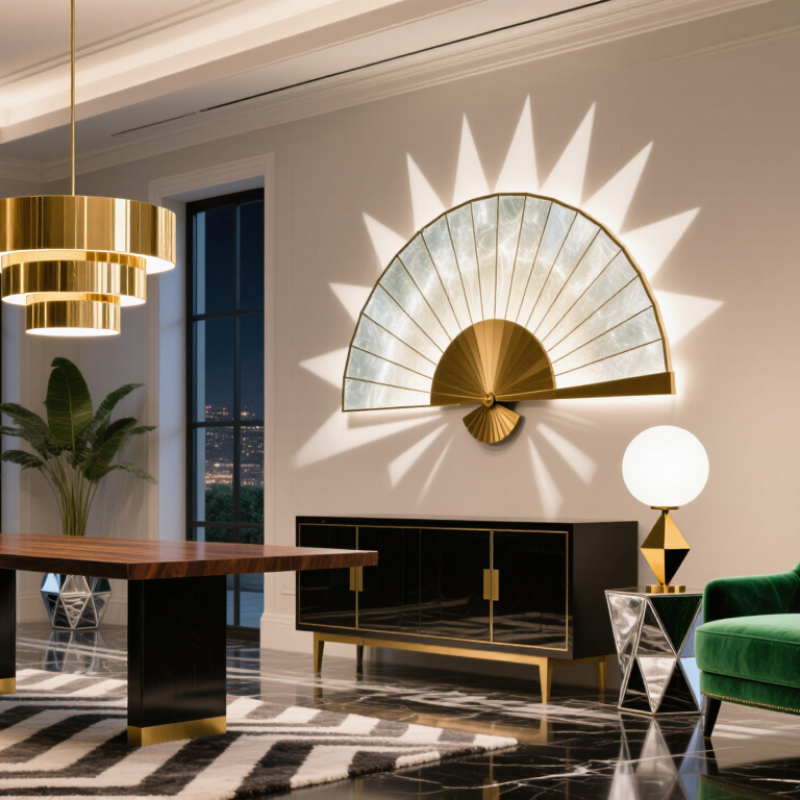
What Are the 7 Best Art Deco Decorative Lighting Options?

Defining Features of Art Deco Decorative Lighting

Art Deco decorative lighting is defined by confident geometry, balanced symmetry, and sculptural silhouettes. Look for stepped tiers, sunburst rays, fan shapes, and repeated vertical lines. These motifs make a fixture feel architectural, even when it is small. Opal or frosted glass softens the light, while clear glass can create sharper reflections.

Materials help establish the period character. Polished chrome, brushed brass, dark finishes, and contrasting glass are common choices. A wall sconce with a stepped metal frame can add structure beside a mirror; a pendant with a rounded glass shade brings a gentler focal point above a table. Scale matters. An oversized chandelier may overwhelm a low ceiling, while a tiny fixture can lose its decorative presence.

The style does not require every detail to match. Pairing a geometric fixture with plain walls often lets its form stand out, though too many metallic surfaces can make a room feel cold. Light quality deserves equal attention: choose a warm, comfortable glow for living areas, and brighter, clearer illumination where tasks happen. A strict period-perfect scheme can feel staged. A little restraint usually feels more lived-in.

How Art Deco Lighting Uses Geometry, Materials, and Light

Art Deco lighting turns geometry into a visible part of a room’s design. Look for stepped silhouettes, fan shapes, concentric circles, and clean symmetry. A tiered chandelier suits a dining table, while a globe pendant softens a narrow entry. Wall sconces can frame a mirror; a geometric table lamp adds a smaller focal point. The effect is deliberate. A sculptural floor lamp, a low flush mount, and a lantern-style pendant round out seven useful options for different ceiling heights and room sizes.

Materials shape the light as much as the fixture’s outline. Frosted or opal glass diffuses brightness, while clear glass exposes the bulb and creates sharper highlights. Brass, chrome, and nickel catch light along their edges. Dark lacquer can make pale glass stand out. For a calmer look, pair one reflective finish with a matte surface rather than repeating shine everywhere. But restraint matters.

Consider how the fixture will work after dusk, not only how it looks in a photograph. A dimmer can help a chandelier shift from task lighting to a softer evening glow, if the bulbs and wiring support dimming. In a small room, a large stepped fixture may feel cramped, even when its proportions seem right on paper. Symmetry can also feel stiff; a single off-center lamp sometimes makes the room more inviting. Check the fixture’s scale and light spread in the actual space.

Seven Art Deco Decorative Lighting Options by Fixture Type

Art Deco lighting is best chosen by fixture type, not by ornament alone. A tiered chandelier suits a dining room, especially with frosted glass and stepped metalwork. A pendant brings the same geometry over a kitchen island or reading nook. Wall sconces add a warm, repeated rhythm beside a mirror or along a hallway. Keep the shapes crisp; too many shiny surfaces can make a small room feel crowded.

A flush-mount fixture works well under low ceilings, while a vanity light gives even illumination around a bathroom mirror. Table lamps offer a smaller dose of Deco detail: look for a stepped base, opal globe, or patterned shade. A floor lamp can anchor a quiet corner, but its shade should direct light where people sit. The scale is easy to misjudge.

Check brightness and bulb compatibility before choosing finishes. The U.S. Department of Energy’s LED guidance says LEDs use at least 75 percent less energy and can last up to 25 times longer than incandescent lighting. That matters for decorative fixtures used every day. Dimming performance still varies, so confirm compatibility rather than assuming every LED will behave smoothly. Art Deco style can be striking, but glare is not elegance.

What Are the 7 Best Art Deco Decorative Lighting Options? — Seven Art Deco Decorative Lighting Options by Fixture Type
Fixture type Art Deco design cues Common materials and finishes Suitable locations Practical selection note
Chandelier Symmetrical arrangement, stepped profiles, geometric arms, and glass shades or decorative drops. Metal frames in brass, nickel, or chrome; clear, frosted, or opal glass. Dining rooms, entry halls, and living rooms with sufficient ceiling height. Check the fixture’s dimensions and hanging height against the room and table below it.
Pendant light A bold geometric shade, a stepped canopy, or a streamlined metal-and-glass composition. Brass or chrome details paired with opal, frosted, or ribbed glass. Kitchen islands, breakfast areas, and smaller dining spaces. For multiple pendants, plan consistent spacing and a comfortable clearance above the surface.
Wall sconce Fan, stepped, or angular backplates; vertical lines; and compact frosted-glass shades. Polished or brushed metal with glass, sometimes with dark contrasting details. Hallways, bedside areas, living rooms, and either side of a mirror. Confirm whether the light is designed to cast light upward, downward, or in both directions.
Flush-mount ceiling light A low-profile, symmetrical form with a stepped edge, geometric frame, or patterned diffuser. Metal trim and diffusing glass, often in opal or frosted finishes. Bedrooms, corridors, and rooms with lower ceilings. A diffuser can soften the light and help conceal the bulbs from ordinary viewing angles.
Table lamp A stepped or sculptural base, a geometric silhouette, and a tailored shade. Metal, ceramic, or glass bases with fabric or glass shades. Desks, console tables, bedside tables, and reading corners. Choose a shade and bulb combination that directs useful light without causing glare.
Floor lamp A tall, clean-lined stem, a stepped base, or a geometric shade that echoes period forms. Metal stems and bases with fabric, metal, or glass shades. Living rooms and reading areas where a table lamp is not practical. Check the base footprint and position the lamp where its cord will not create a trip hazard.
Vanity light Balanced rows of lights, simple geometric backplates, and opal or frosted shades. Metal fittings with glass shades; moisture-rated finishes and construction where required. Bathrooms and dressing areas, particularly above or beside a mirror. Select a fixture rated for its installation location and follow local electrical requirements.

Where Each Art Deco Lighting Option Works Best

Art Deco lighting works best when its shape suits the room’s scale and daily use. A tiered glass chandelier can anchor a dining room or tall entry, where its layers have space to catch the eye. Over a kitchen island, a geometric pendant gives focused light without spreading across the whole ceiling. Check its height from seated and standing positions; a striking fixture can feel intrusive if it hangs too low. Small rooms need restraint.

For low ceilings, a globe flush mount brings curved glass and metal detail to hallways, bedrooms, or compact foyers. Pair of wall sconces works well beside a bathroom mirror or along a narrow corridor, adding light without taking up floor space. A torchiere suits a living-room corner, especially when its upward glow softens a darker ceiling. But it may leave reading areas dim. Add a separate task light if needed.

A desk lamp with stepped lines or a rounded shade belongs on a study table, where its light can be directed onto papers. A picture light highlights framed artwork in a living room or passage, though the beam should not create glare on glass. Warm bulbs often flatter brass and frosted glass, but the right tone depends on wall color. I would not match every fixture perfectly; a little inconsistency can make a room feel lived in.

How to Choose and Maintain Art Deco Lighting

Art Deco lighting works best when its geometry suits the room, not merely the photograph. Consider a tiered chandelier for a tall dining room, a stepped pendant over a table, or a globe fixture for softer light. Wall sconces can frame a mirror, while flush mounts suit low ceilings. Add a geometric table lamp or slender torchiere for a reading corner. Measure twice. Check ceiling height, fixture width, and whether the shade hides the bulb from seated eye level.

For everyday use, choose bulbs with a warm color temperature and confirm they work with the fixture’s dimmer. The U.S. Department of Energy’s Energy Saver guidance says LED bulbs use at least 75% less energy and can last up to 25 times longer than incandescent bulbs. That can reduce replacement work, though dimmer compatibility still matters. A striking glass shade may also create glare; test the light at night before committing.

Dust gathers. Switch off the fixture and let bulbs cool before cleaning. Wipe metal with a soft, dry cloth; clean glass gently with a damp cloth, then dry it to prevent streaks. Avoid abrasive pads, which can dull plated finishes. Check screws and hanging hardware periodically, especially on heavier chandeliers. For vintage fixtures with cracked sockets, frayed wiring, or loose connections, arrange an inspection by a qualified electrician. The finish may look sound while the wiring is not.

FAQS

What shapes define Art Deco decorative lighting?

Look for stepped tiers, fan shapes, sunburst rays, circles, and repeated vertical lines. Symmetry often gives fixtures a crisp, architectural look.

Which materials suit this lighting style?

Polished chrome, brushed brass, dark finishes, and contrasting glass are common choices. Pairing one reflective surface with a matte finish can keep a room calmer.

How do different glass shades affect the light?

Opal or frosted glass softens brightness. Clear glass creates sharper reflections and shows the bulb more clearly.

Which fixture types work in different rooms?

Try a tiered chandelier over a dining table, sconces beside a mirror, or a pendant above an island. Table and floor lamps add smaller focal points.

How should I choose a fixture for a low ceiling?

A flush mount can suit a low ceiling. Large stepped fixtures may feel cramped, even when their measurements seem suitable on paper. Scale is tricky.

How can I avoid making a room feel too shiny?

Limit reflective finishes and balance them with plain walls or matte surfaces. Too much metal can feel cold, especially in a small room.

What kind of light works best for everyday use?

A warm, comfortable glow suits living areas, while clearer illumination helps with tasks. Check how the fixture spreads light, not just how it looks.

Can Art Deco lighting work with dimmers and LED bulbs?

Often, but compatibility matters. Check that the fixture, bulb, and dimmer support dimming together; otherwise, the light may not fade smoothly.

Does every fixture need to match the period style?

No. One geometric fixture can stand out against simple walls. A perfectly matched room can feel staged, though a little restraint usually feels more lived-in.

Conclusion

Art Deco Decorative Lighting is defined by its bold geometry, balanced symmetry, and polished materials, combining practical illumination with a distinctive decorative presence. Layered shapes, metallic finishes, glass, and carefully directed light can add warmth and visual structure to a room without overwhelming it. The style’s defining qualities can appear across seven fixture types: chandeliers, pendant lights, wall sconces, table lamps, floor lamps, flush-mount ceiling lights, and decorative picture or accent lights.

Each option suits different spaces and needs. Chandeliers can create a focal point in a dining or entry area, while pendants and ceiling fixtures provide overhead light in kitchens, hallways, or rooms with lower ceilings. Sconces, table lamps, and floor lamps offer softer layers for reading, relaxing, or highlighting architectural details. Choosing the right fixture involves considering room size, ceiling height, the desired light level, and how finishes work with existing decor. Regular dusting and gentle cleaning help preserve both the materials and the fixture’s appearance.

Charlotte Whitmore

Charlotte Whitmore

Charlotte Whitmore is a professional marketing specialist with a strong understanding of product strategy, customer needs, and digital communication. As a key contributor to our company’s content team, she regularly updates the corporate website with insightful blog articles that explain product......